Introduction
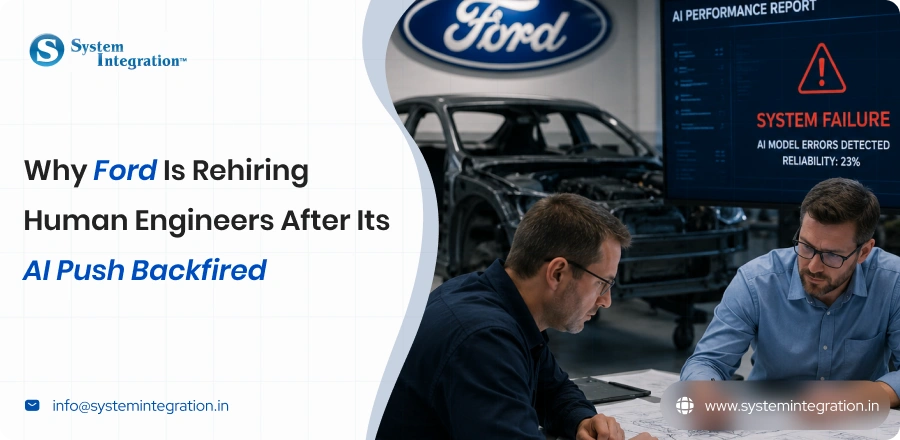
Ford, one of the biggest names in the auto industry, just raised the biggest question against the AI hype by rehiring the fired engineers.
Ford invested in AI to minimize engineering workloads, but now it is putting humans back behind the wheel. The initiative has reverberated through the tech and automotive sectors, raising a question no company thought it would be asking this soon: Will AI actually replace human knowledge?
Ford has learned the hard way that although AI can speed up and automate repetitive development tasks, it remains baffled when confronted with complex engineering decisions, creative challenges or real-world problems.
This change of decision is all the more relevant given that the future will not be humans vs AI as it is so often covered in media debates, but the right mix of both. Why the surprising move Ford made about AI contains lessons for other businesses.
the Quick Story
What happened
Ford had an ambitious AI-first engineering strategy, but wait, that takes a little twist. The company has been integrating AI across its development process for years and is now rehiring 350 engineers.
The reason? AI is great for accelerating simple tasks, but is still not good enough at the complex decision-making, creativity and practical problem-solving that mid to senior engineers provide.
The takeaway: Ford made it clear that the future isn’t replacing engineers with machines, it’s applying AI’s speed and understanding to human challenges.
What Went Wrong
The institutional knowledge gap
However, much of that hands-on knowledge went with the engineers who departed. Thus, AI could not bother to process existing data, but years of practice, engineering senses and solutions that were never documented.
Ingesting design requirements wasn’t enough
AI that was just fed design requirements did not generate reliable engineering decisions, according to Charles Poon. AI might be able to analyse specs, but it often does not have enough context to spot design flaws or make difficult trade offs.
Siloed teams Created Blind Spots
Engineering does not happen in isolation. Software, hardware, manufacturing and supply chain teams weren’t aligned, and critical issues fell through the cracks. AI couldn’t fill the communication voids between departments or substitute for cross-functional teamwork.
The price of getting it wrong
The consequences were very serious:
- multiple recalls in 2026, one of Ford’s biggest recall years.
- Pressure is mounting to improve product quality and avoid expensive defects.
Is Ford Abandoning AI? No, Here’s the Real Strategy
➜ AI is growing, not going away
Ford is not getting out of the AI business. The firm has brought on the board multiple AI-controlled tests for predicting issues in advance, improving quality checks, and speeding up product improvement.
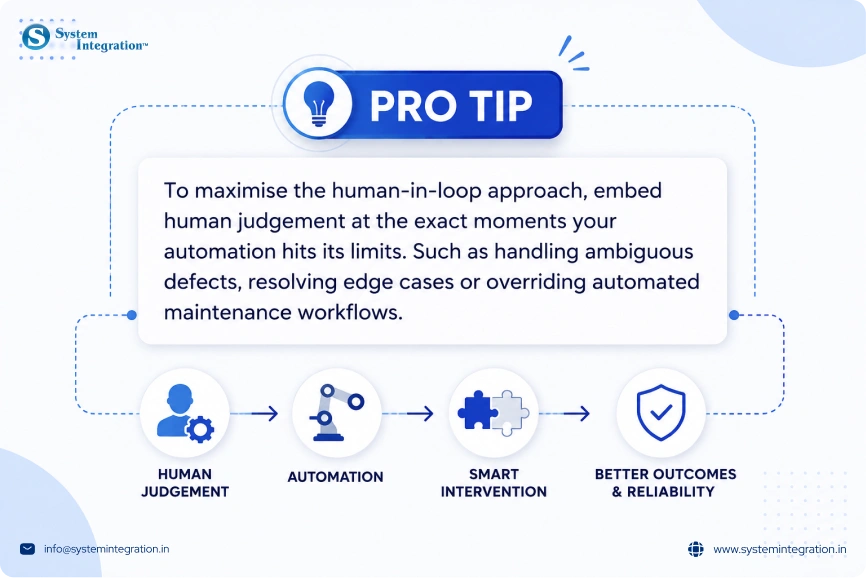
➜ The new approach is Human-in-the-loop
Ford is pushing AI to complement, not replace, engineers. AI takes on repetitive analysis and testing, but experienced engineers make the ultimate decision when it comes to complex designs involving safety and performance.
➜Veteran Engineers passing on their knowledge
Ford has “grey beard” engineers who are now mentoring the next generation. Their skill is keeping the apprentice engineers evolving while breaking it down to train a machine learning system, making sure precious engineering knowledge doesn’t fade away over time.
What this means for AI in Manufacturing
AI amplifies your expertise rather than replaces it
AI is shining in collaboration with people who have the best skills. It can help in accelerating analysis, testing and repeatable tasks but is still ran based on human knowledge, experience and sense of logic to provide a valid result.
Ford isn’t the only company learning this lesson
Ford isn’t alone. As found in the case of Duolingo and GM, other companies have adapted their AI strategies when automation is augmented with human review versus fully replacing people.
Making this a fit for every business
If your business is dependent on safety, quality or precision, you must use AI as a tool and not the decision-maker.
- Involve seasoned professionals in crucial decisions.
- Automate repetitive and data-heavy tasks using AI.
- Mentor or documenting so that institutional knowledge is retained.
- Employ AI in speed, human judgment for optimal results.
Conclusion
Ford learned this the hard way. AI isn’t a shortcut to omitting humans. AI is great for scanning through data, automating repetitive tasks, and quickly developing front-end designs, but it lacks intuition, which seasoned engineers build over time from working on hundreds of complex projects, creativity to solve high-level problems and real-world judgment.
The era of delusion that automation can replace human capabilities is over. The future is about organizations where AI complements human experience.
FAQs
As Ford pivots back towards a focus on engineering capability, it has recently rehired about 350 engineers. The shift aligns with the company’s view that AI should augment, not replace.
A gray beard engineer is one with a few decades of practical wisdom. It is these engineers who help solve difficult problems, train younger workers (to whatever extent possible), and transfer a kind of knowledge that AI will not soon replace.
Other things that AI had difficulty with were engineering judgement, cross-functional collaboration and undocumented institutional knowledge. These constraints made it hard to spot some real-world design and manufacturing issues.
Yes, it still uses AI for quality control, but it has shifted to a human-in-the-loop approach. AI with hands-on expertise, audit designs, and mentors younger staff.