Introduction
Scams are becoming more sophisticated, rapid and dangerously credible. Clone the voices, create a deepfake Video call, get fake job offers and even AI-driven phishing of emails received by the bag. Scammers are now using artificial intelligence to trick people-minute controls like never before.
What is most alarming about these digital scams is how human they feel. A fake message could even mimic your friend, boss or family member until you actually see the risk just too late.
In this blog, we will find out how scammers use AI tools for their advantage in the year 2026, what fraud tactics to be on the lookout for, and practical steps you can take to protect yourself and your business online.
What is an AI Scam and How Does it Work?
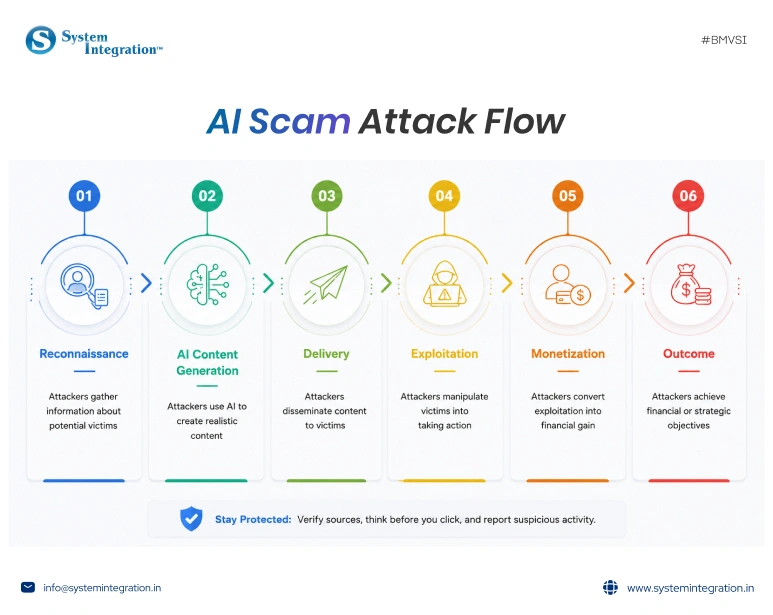
AI-powered scams are frauds that use artificial intelligence technologies including generative AI, voice cloning, deepfakes or conversational bots, to trick people into giving up money, passwords or sensitive information.
AI Scams vs Traditional Fraud
| Traditional Fraud | AI Scams |
|---|---|
| Mass messages to a lot of people | Highly personalised messages designed for the target |
| Obvious spelling or grammatical errors | Smooth, genuine communication |
| Manual work by scammers | Automated at a huge scale |
| Limited ability to impersonate | Realistic voice, video and fake identity |
Why Digital Scams Have Multiplied in 2026
Why AI Scams Are So Dangerous This Year. Several trends have made AI a particularly dangerous target for scams in 2023.
- Hyper-personalised phishing attacks
- AI looks at your online activity to write messages that align with the subjects you follow, your profession or something you bought recently.
- Realistic fake voices and videos
- Deepfake Voice cloning means you can recreate someone from how they talk to getting their own voice.
- Flawless writing
- Emails generated by AI cyber threats often have no grammatical errors, making them less conspicuous.
- Rapid automation
- Chatbots and automation allow scam websites to approach thousands of victims at once.
- Emotional manipulation
- With deepfakes or cloned voices, the level of trust and urgency can create an illusion that pushes people to act immediately.
Type of AI Scams in 2026
| AI Scam Type | What Happens | Safety Tip |
|---|---|---|
| AI Voice Cloning | A fake voice call in which money or data is demanded | Verify the caller |
| Deepfake Videos | Fake AI videos spread scams | Check trusted sources |
| AI Phishing Emails | Smart fake emails steal information | Avoid clicking suspicious links |
| AI Investment Scams | Fake AI investment promises | Research before investing |
| Fake AI Chatbots | Fake support bots steal credentials | Use official websites |
| AI Job Scams | Fake recruiters ask for payments | Verify job offers |
| Fake Shopping Sites | AI-made scam ecommerce stores | Shop from trusted sites |
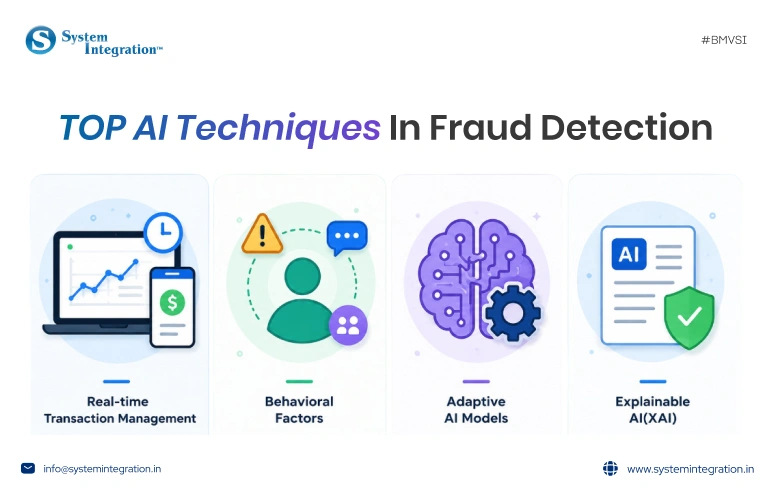
How Scammers Collect your Data using AI?
↪ Social Media Scraping
The information gathered through AI tools to target the scams includes the photos, personal details, location and interests of those present on social media profiles.
- Public posts reveal personal information
- AI tracks user behaviour patterns
↪ Public Data Mining
AI scrapes public databases, websites and other online records to collect phone numbers, emails, addresses and employment details for fraud and phishing purposes
- Uses leaked public information
- Builds detailed victim profiles
↪ AI-Powered Identity Profiling
Trained on data prior to October 2023, AI examines online activity and shopping habits to predict behaviour and then deceives the target with tailored scam texts and audio that are highly believable.
- Creates targeted scam campaigns
- Mimics personal communication styles
↪ Fake Surveys and Chatbot Interactions
Fraudsters employ AI chatbots and false surveys to deceive users into disclosing sensitive information such as login credentials, banking details, and personal identifiable info online.
- Fake rewards attract victims
- Chatbots collect private details
↪ Data Leaks Fueling AI Fraud
With expansive public databases that contain private information leaked by cyberattacks, the AI tools automate scams, identity theft and phishing campaigns on harvested personal and financial data at scale.
- Leaked passwords enable account hacks
- Stolen data improves scam website accuracy
Warning Signs of AI Scams to Keep in Mind
- Urgent Emotional Messages
- Scammers use emotion-stories to conjure panic or fear that requires immediate action without fully verifying the situation.
- Requests for Money or OTPs
- When fraudsters actually impersonate known individuals or official institutions online, asking for online payments, banking information or OTPs.
- Suspicious Attachments and Links
- Scam messages contain malicious links or attachments that steal passwords, banking information, or infect devices with malware.
- Offers Too Good to Be True
- Fake AI scams lure unsuspecting victims online quickly with promises of unbelievable discounts, guaranteed profits, gifts, or instant rewards.
- AI-generated limited history profiles
- Fake profiles commonly have few posts, minimal interaction, stolen pictures and recently created accounts with no real online presence.
Best Ways to Stay Safe from AI Scams in 2026
★ Verify Before You Trust
➜ Questionable calls, videos and emails should be verified and confirmed before any money, passwords or personal information will be shared on the Internet.
➜ Secret family verification codes for emergencies or urgent financial requests received through calls or text.
➜ Keep calm during urgency, do not rush, urgently denying your hasty decisions impulsively or out of fear messages.
★ Protect Your Personal Data
➜ Be cautious about what you put on an open social media profile—do not make personal details, trips to key locations or travel plans and financial information public knowledge too often.
➜ Do not upload clear voice recordings and videos that can be used by scammers for AI cloning and deepfakes.
➜ Use private settings to limit who sees your posts, images, and account-related data on the internet.
★ Use Cybersecurity Tools
➜ AI electronic scam detection software can be directly installed, which will analyse potential phishing websites, detect emails and suspicious online activities without your manual input.
➜ Set up spam filters and advanced cyber threat protection that can filter out harmful messages, links, and malicious attachments from your systems.
➜ Enable multi-factor authentication (MFA) to protect banking, social media and important accounts you use online.
★ Stay Updated on New Digital Scams
➜ Download and use call-blocking and text-filtering apps to shield your smartphone from AI scammers.
➜ Keep checking regularly on the local bank security advisories or follow the security instructions they provide on their official websites.
➜ There are a lot of trusted content creators on social media who spread awareness about new scam websites. Check those blogs or videos, and even regularly check the news.
Ending Thoughts
In the advanced era of 2026, AI scams are advancing, and both consumers and businesses will need to focus on security awareness, verification habits, and cutting-edge protection techniques. Working with a trusted AI/ML consulting company can support organisations in fortifying their digital security to counter emerging AI-driven fraud challenges.
FAQs
Look for the little inconveniences in lighting, lip sync not proper, and facial micro-expressions not proper. However, you should also focus on unusual behaviours like them making unusual requests, framing urgency, communication through unexpected channels and more.
First of all, if you find you are targeted by AI scams, then stop engaging immediately, contact the party through other verified channels and report that incident to the cybercrime branch and also notify others to stay alert.
It uses LLMs to maintain convincing, emotionally intelligent conversations at scale across dating platforms and messaging apps. These bots adapts tone, personality, and conversation topics to each target and learning preferences over time.
Yes, they can use public voice clips from videos, reels, podcasts, or voice notes. You don’t need to panic, but you should avoid sharing your personal and sensitive information on social media platforms.