Introduction
Picture yourself losing a customer just because your payment had a slightly longer process. In today’s digital age, transactions can hinge on security, convenience, and speed.
With cash becoming less common, many businesses are considering developing their own payment apps due to the challenges of payment processing in our increasingly contactless world. From 2026 to 2032, the global payment app market is set to grow significantly, driven by the rising adoption of smartphones, as well as innovations in the fintech industry.
If you plan to launch your own payment app or are curious about the key features, tech stack used and more information related to app development services, this blog will be useful for you.
Types of Payment Apps
| Payment App Type | Primary Use | Most Useful For |
|---|---|---|
| P2P (Peer-to-Peer) | Send and receive money between users. | Consumer platforms, fintech apps |
| Digital Wallets | Pay digitally with stored payment methods | Retail, eCommerce, Loyalty Program |
| Payment Gateways | Safe online payment processing | eCommerce, SaaS, Marketplace |
| Mobile Banking & Neobanks | Offer full digital banking services | Banks and fintech firms |
| QR Code Payment Applications | Allow contactless payments in store | Retail stores, restaurants, and local businesses. |
| Cross-Border Payment software | International money transfer | International companies, freelancers |
| Cryptocurrency Payment Apps | Cryptocurrency transaction support | Web3 platforms, crypto companies |
Choosing the Right Type for Your Business Model
Choosing the best payment solution will depend on the type of clientele, business goals, and the business model for making money.
- If you have it in you to build a fintech product for consumers, think of building a P2P payment app or offering a digital wallet.
- However, if you have an e-commerce shop or marketplace, use payment gateways to make your online payments securely.
- If you are building a digital bank, you will need either a mobile banking app or neobanks which give a complete financial ecosystem.
- Even in the case of a physical store, you can use QR code payment as an easy way to pay for your purchases with a QR code payment app.
- Now that your customers want to make cross-border payments, you need a cross-border payment app which will help in connecting worldwide for efficient payment and good exchange rates.
- If you are looking to work with Web3 or blockchain, a cryptocurrency payment app can provide you with all the needed features to make transactions using cryptocurrency securely.
Must-Have Features of a Payment App
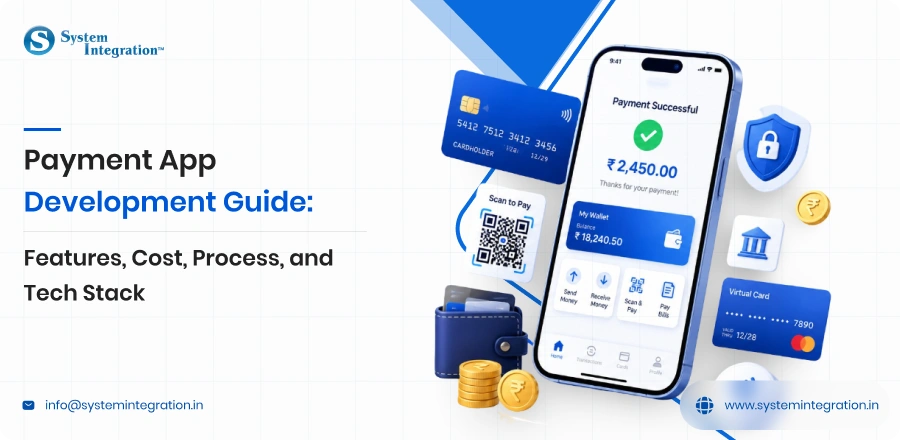
➜ QR Code and NFC Payments: Facilitate fast, contactless transactions for Online Store and Initial transactions.
➜ Send, receive & request money: Instantly send money to friends, family and businesses with a few taps.
➜ Secure Auth: Protect users’ accounts with bio-metric, 2FA and OAuth login.
➜ In-App Support & AI Chatbots: Live chat, AI bots and help centers for instant customer support.
➜ Linking of Bank Accounts & Cards: Allow users to securely link their bank accounts, debit/credit cards and digital wallets.
➜ Transaction History & Alerts: Show full payment history and alert you instantly on every transaction.
| Enhanced Features That Separate A Payment App 👉 Automate / Scheduled / Recurring Payments: An automatic bill payment, subscription, and transfers for recurring payments. 👉 Real-Time FX & Multi-Currency Support: Easily send international payments with real-time currency conversion. 👉 Refunds & Chargeback Management: Streamline and quicken refunds while managing payment disputes in an effortless manner. |
Security and Regulatory Compliance for Payment App Development
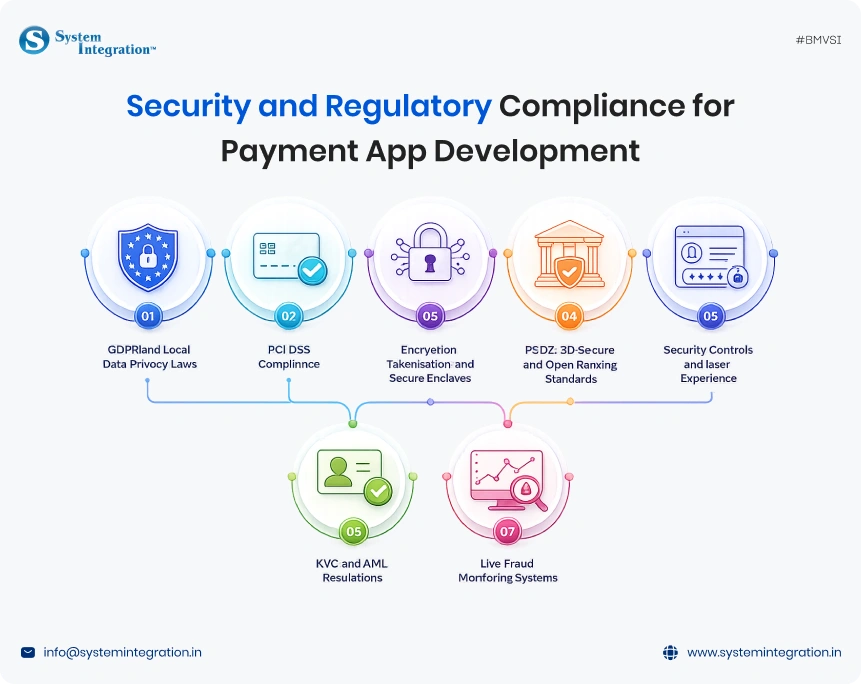
- GDPR and Local Data Privacy Laws
- Directives Payment apps need to comply with GDPR and local privacy law, ensure user data collection, storage and processing are lawful, secure, transparent and that users give consent.
- PCI DSS Compliance
- The Payment Card Industry Data Security Standards (PCI DSS) is a global security standard that helps to safeguard cardholder data and requires payment processing to go through a secure channel, protecting businesses.
- Encryption, Tokenisation, and Secure Enclaves
- Sophisticated encryption, tokenisation and secure enclaves keep sensitive payment information safe by restricting access and mitigating the risk of data breaches.
- PSD2, 3D Secure and Open Banking Standards
- PSD2, 3D Secure and Open Banking are driving more secure digital payments with strong customer authentication, bringing greater transaction security, transparency and financial integrations from third parties.
- Security Controls and User Experience
- Usability is never as important to lose in the name of security. With biometric authentication, flexible verification, and frictionless authentication capabilities, protection is maintained without sacrificing user experience.
- KYC and AML Regulations
- By making it easy to verify the identity of users, AML and KYC regulations help to prevent financial crimes while complying with all local and international rules.
- Live Fraud Monitoring Systems
- AI-Powered Fraud Monitoring: Reviews transactions in real-time, flags suspicious activities and blocks fraudulent payments while strengthening security.
Payment App Development Process: Step-by-Step
Step 1: Market Research and Niche Validation
Know your audience, investigate potential competitors, and validate demand before spending on an app development company in India, and be able to articulate your unique value proposition.
Step 2: Regulatory and Compliance Roadmap
Know the legal constraints, acquire the licenses, follow AMC & KYC rules of AML guidelines, PCI DSS compliance for user data protection and see to it that your budgeting model is following GDPR & financial regulations of a region.
Step 3: UX Research, Wireframes, and Prototyping
Through user flows, wireframes and interactive prototyping, you can confirm the experience of the app before it is even developed. app development services providing companies help in creating intuitive UX designs for your app.
Step 4: Choosing the Tech Stack and Architecture
Choose scalable technologies, cloud infrastructures, databases, APIs and security frameworks that can support high-performance solutions and future growth.
Step 5: MVP Development
To validate your product in the quickest way possible, build a minimum viable product (MVP) version with the required payment features to check feature functionality and user feedback.
Step 6: Payment Gateway and Banking API Integration
Integrate smoothly with payment gateways, banking APIs, digital wallets, Third Parties Services you are willing in your app to ease financial transactions for your customer.
Step 7: QA, Security Testing, and Penetration Testing
We test the payment app for vulnerabilities, penetration testing and performance Optimisation to ensure it is secure and reliable for the users. we have a team of experts who are experienced at this job.
Step 8: Deployment and App Store Launch
Deploy the app once it gets developed, complete app store and play store requirements, set up production environments, and deploy your payment app to supported platforms.
Step 9: Post-Launch Support, Monitoring, and Scaling
As your user base grows, you need to constantly monitor performance, release updates as the users grow on the app, improve security, fix issues and scale infrastructure.
Tech Stack in Payment App Development
Native vs Cross-Platform Next: Where should I deploy Mobile Applications?
Your payment app decision boils down to budget, time frame, performance requirements, user demographics and eventual maintenance of your cash program.
What to choose:
➔ For top performance, security, and only available things for your platform, you should go with Native.
➔ Opt For Cross-Platform when fast development, cost-effectiveness and diverse coverage on devices are priorities.
Native (Swift, Kotlin) or Cross Platform (Flutter, React Native)
Native app development services offers better performance, security and specific platform experience as compared to cross-platform frameworks, which can save costs and reduce time to market with a shared codebase.
What to choose:
➔ Native: feature-rich, high-performance applications with native platform capabilities.
➔ Cross-platform: Rapid development, minimal budget needed, and launch on both Android and iOS at the same time.
Backend: Node. js, Java, and TypeScript-Based Architectures
Node. js supports real-time processing, Java brings in enterprise-scale reliability and TypeScript enhances code quality, scalability, and maintainability in payment applications.
What to choose:
➔ Node. js: API payment processing in real-time.
➔ Java: The large enterprise finance systems
➔ TypeScript: futuristic development that scales and maintains the backend.
Databases: Postgres SQL, MySQL, MongoDB, SQL Server
They securely handle transactions, user data and payment records while providing various degrees of scalability, consistency, performance and variability in the data stored.
What to choose:
➔ PostgreSQL\/MySQL – Structured Financial Data \/ Transactional Consistency
➔ MongoDB: Flexible data models.
➔ SQL Server: For Microsoft technology-based enterprise-class environments.
Web Frontend: React. js and Next. js
React. js, Next.js, with the help of server-side rendering, increases Page load speed and SEO optimizations for such web apps.
What to choose:
➔ React. js: Interactive single-page applications.
➔ Next, React for SEO-friendly frameworks needing speed and server-side rendering
Payment Gateways: Stripe, PayPal/Braintree, Razorpay, Adyen, Square
Payment gateways securely process transactions, support multiple payment methods, manage compliance, and simplify payment acceptance across local and international markets.
What to choose:
➔ Stripe: Global SaaS and subscription businesses.
➔ PayPal/Braintree: International consumer payments.
➔ Razorpay: Indian businesses.
➔ Adyen: Large enterprises.
➔ Square: Retail and POS businesses.
How Much Does it Cost to Build Payment App
The most easy way and straight forward way to understand payment app cost is the type of app or the complexity you want in it. As each type of payment app costs a different budget, your requirements also make a difference.
| 👉 Basic payment app = approx cost range is $ 30,000 to $ 70,000 👉 Mid-level payment app = approx cost range is $ 50,000 to $ 150,000 👉 Enterprise-level payment app = approx cost range is $ 150,000 to $ 200,000 👉 Highly complex payment app = approx cost range is $ 200,000 to $ 300,000 |
Monetization Models for Payment Apps
Interchange and Interest-Based Revenue
- Receive income via interchange fees of debit and credit card transactions.
- Earn interest via lending, deposits or amounts sitting in the wallet.
Subscription and Premium Tiers
- Have a monthly or yearly premium plan with advanced features.
- Features at your disposal, like higher limits, analytics and priority customer support.
Value-Added Services (Lending, Insurance, Investments)
- credit card and BNPL services offer loans, insurance, investment options, or both
- Maximize customer life time value and build new revenue streams.
Transaction Fees
- Charge a percentage or set fee on each successful transaction.
- Excellent for P2P apps, merchant payments, and payment gateway platforms.
Why Build Online Payment App with BMV System Integration
Creating a secure and safe online payment app means understanding the complexity of the app thoroughly and also comprehending the requirements of the clients. This is vital for creating a cutting-edge app in the competitive market.
By collaborating with BMV System Integration, the best mobile app development company in India you get to work with the team of expert developers who comprehend your requirements of a payment app properly and develop a powerful app that is capable of scaling with an increasing user base.
Concluding Part
The online payment app development market is booming, but so are cyber threats. That’s the reason security is not a choice; it’s the basis. This is where, partnering with the best AI software development company comes in. As its experienced and knowledgeable to create a secure app that is also scalable even when the user base increases without any downtime.
FAQs
The cost typically ranges from $30,000 to $300,000+, depending on the app’s complexity, features, integrations, security requirements, platform, and development team’s location.
A basic MVP can take 3–6 months, while a feature-rich payment app with advanced security, compliance, and integrations may require 6–12 months or more.
Users expect secure authentication, instant transfers, QR payments, digital wallets, AI-powered fraud detection, spending insights, real-time notifications, and seamless user experiences.
Choose native for maximum performance, security, and platform-specific features. Cross-platform is ideal for faster development, lower costs, and launching on Android and iOS simultaneously.
Most payment apps must comply with PCI DSS, KYC, AML, GDPR (or regional privacy laws), PSD2, and 3D Secure, depending on the countries and markets they operate in.