
Introduction
Meta has just raised the bar for AI creativity, and it’s not just another image generator.
With Muse Image coming out and Muse Video previewed, Meta is expanding what users can make right within its AI ecosystem. Muse Image allows you to create, edit and transform images with natural language, photos, sketches and multiple visual references, using Meta AI Muse Spark and Muse Video is a first look at Meta’s next step in AI-powered video generation.
These tools, integrated into Meta AI and slowly being introduced to apps like Instagram, WhatsApp and Facebook. In this article, we are going to talk about what Muse Image and Muse Video offer, the features that make them stand out, availability and why this update has been garnering so much attention in the AI space.
What Is The Muse Image? Meta’s First Image Generation Model
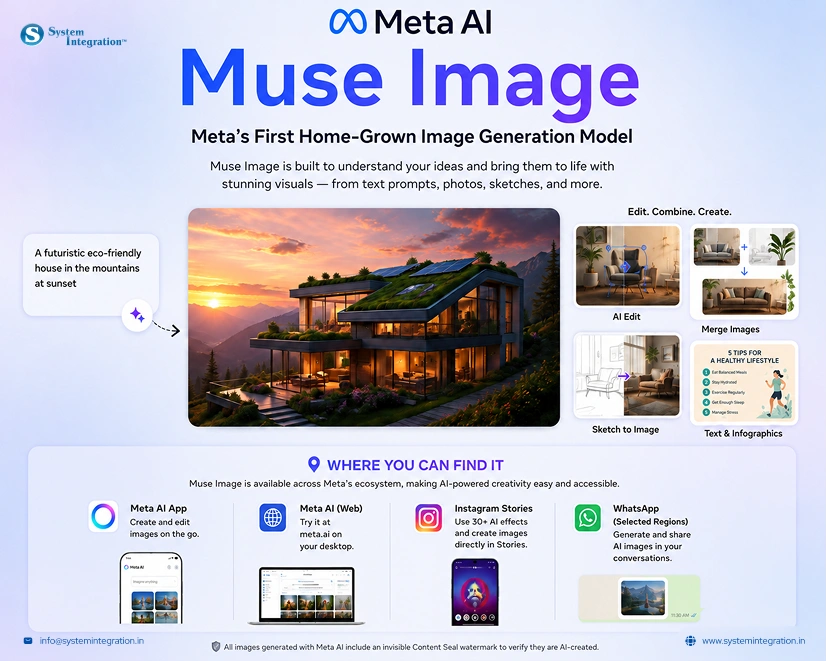
Muse Image is the first AI image-generation model built entirely in-house by Meta and is designed to generate and edit images using simple natural-language prompts. That’s a big shift from third-party AI models to Meta’s own technology.
Muse Image enables users to:
- Create images from text descriptions
- Use AI to edit existing photos
- Merge multiple reference images into a single one
- Convert sketches to detailed visuals
The model is built to fuel AI creativity across Meta’s ecosystem and deliver faster, more consistent results.
Built by Meta Superintelligence Labs (MSL): Code named “Mango”
Muse Image is the inaugural image generation model built by Meta Superintelligence Labs (MSL), Meta’s dedicated AI research division. The project was internally called “Mango” during development. The model is expected to better understand complex prompts, perform accurate image edits, and combine multiple reference images into one higher-quality result.
How It Replaces Third-Party Tools Such as Midjourney and Black Forest Labs
Meta has previously used outside image generation tech for certain AI features. With Muse Image, the company is bringing image generation in-house.
Which reads as:
- Greater oversight of AI development
- Faster release of new features
- Better cross-Meta app integration
- One AI experience for the user
- Launch Date and Where to Stream It Now
Muse Image was announced by Meta on 7 July 2026.
Now available on:
✅ Meta AI app
✅ Meta AI website (meta.ai)
✅ Instagram Stories (rolling out in the U.S.)
✅ WhatsApp (in some countries)
Key features of Muse Image that set it apart from other tools
✔️ Agentic AI Generation: Use Meta AI Muse Spark to reason through prompts before generating images for more accurate results.
✔️ Multi-Image Composition: Combine multiple images or include public Instagram accounts using @mentions.
✔️ Sketch-based editing: Annotate, sketch or circle parts of an image to make precise edits without having to start from scratch.
✔️ AI Room Redesign: Upload a picture of your room and get redesigned versions with real furniture inspiration from Facebook Marketplace and the web.
✔️ Deep Meta Integration: Meta AI, WhatsApp, the web and 30+ AI effects in Instagram Stories are available.
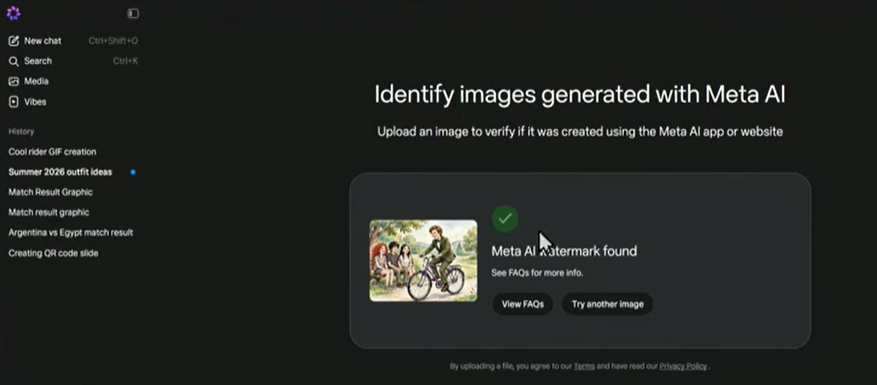
✔️ AI Content Watermarking: All AI-generated images are embedded with an invisible provenance watermark to prove they were created by Meta AI.
| The Difference Between Muse Image and Muse Spark ⚖️ Muse Image and meta Muse Spark are part of Meta’s AI family. Where spark serves as the reasoning brain and image acts as the creative partner/hands. 🧠 Muse Spark: reasoning & chat. A multi-modal large language model(LLM) that understands, plans, and answers. It processes voice, text and visual inputs and “thinks” and searches the web. 🎨 Muse Image: Creates new visuals and edits existing photos from text prompts. Blends multiple photos, restores old images, and generates legible images. |
What is Muse Video? Early Preview explained
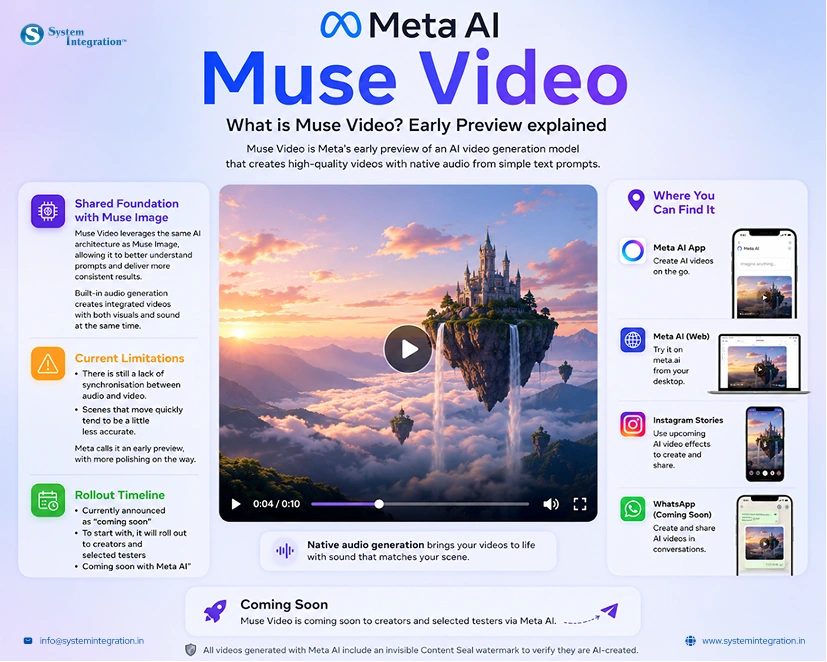
Shared Foundation with Muse Image
Muse Video is also more consistent than Muse Image since it leverages the same AI architecture under the hood, allowing it to gain a better understanding of prompts. There is also built-in support for audio generation, which means that images and sound can be spawned at the same time, creating an integrated AI video.
- Current Limitations
- There is still a lack of synchronisation between audio and video
- In fact, scenes that move quickly tend to be a little less accurate.
- Meta calls (it) an early preview, with more polishing on the way
- Rollout Timeline
- Currently announced as “coming soon”
- To start with, it will roll out to creators and selected testers
- Coming soon with Meta AI
The Privacy Backlash: CAA’s Opt Out Criticism
CAA Statement On Consensual Name, Image, and Likeness
CAA (Creative Artists Agency) contends that the use of individuals’ names, images and likeness for artificial intelligence should not be automatic but instead require “unambiguous agreement.”
The Importance of This for Creators and Public Figures
Higher level of consent for other uses of identity & content. In the case of creators and public figures, they are looking for more control over how their identity and content are used, so there is less chance that somebody else will use unauthorised AI-generated representations.
Meta’s Opt-Out Model: How it Compares with Industry Standards
Meta uses a largely opt-out model, while many say that an opt-in approach offers greater user consent and stronger privacy protection.
Wrapping Up Words On Meta’s New Muse Image And Video Update
These examples from Muse Image and Muse Video by Meta are also a great leap forward in AI-driven creativity using Meta Muse Spark. Muse Image is already being pushed out across Meta’s platform while Muse Video is only in early preview mode. All of this emphasizes Meta’s goal of speeding up content creation through AI, making it intelligent and more accessible.
FAQs
Yes. Muse Image is available for free via Meta AI, and most of its core features are currently freely accessible wherever the rollout exists.
Muse Image is the main AI image generation model, and Muse Spark is Meta’s reasoning model that allows it to understand prompts and complete multi-step tasks with high accuracy.
Meta has just announced Muse Video as an early preview. It will first be available to creators and select testers before rolling out into Meta AI.
Meta’s course of action gives eligible users the option to fill out a privacy form to escape having certain public info used in AI training. But availability varies by region and is dependent on local privacy laws.