Introduction
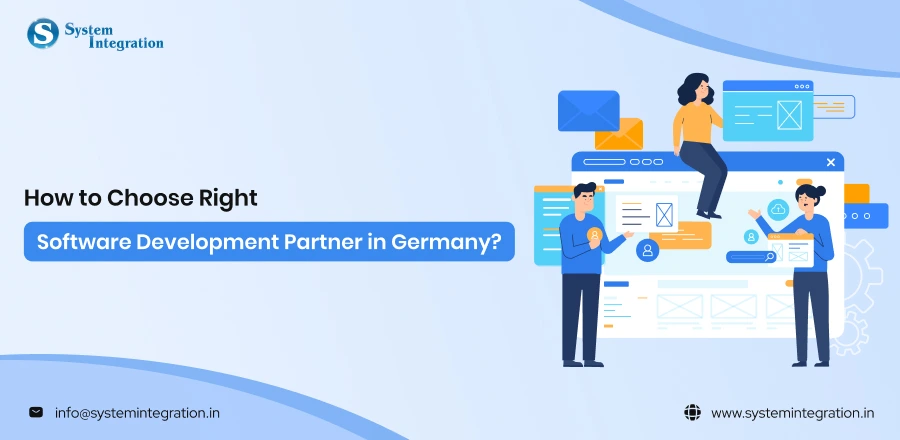
Germany has long been known for engineering excellence, precision, and quality and the same standards apply to its software ecosystem. Today, as businesses accelerate digital transformation, hiring the right software development company in Germany has become both a strategic advantage and a complex decision.
Whether you’re a startup looking for custom software development or an enterprise scaling digital operations, understanding the German market is crucial before choosing a partner.
Germany’s Software Development Market: What You Need to Know
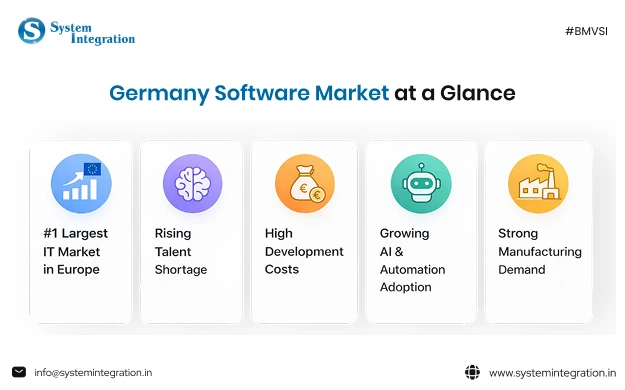
Germany is the largest software market in Europe, accounting for a significant share of the continent’s IT ecosystem. It continues to grow steadily, driven by digital transformation across industries like manufacturing, healthcare, fintech, and logistics.
The IT market is expected to expand by over $30 billion between 2024 and 2029, fueled by technologies such as AI, cloud computing, IoT, and big data.
What makes Germany unique is the dominance of SMEs (the Mittelstand), which contribute heavily to IT adoption and demand highly specialized software development services tailored to their operations.
At the same time, the country is facing a significant shortage of skilled developers, pushing many companies to partner with external vendors or outsource development.
Key Challenges When Hiring a Software Development Company in Germany
Hiring a reliable software development company in Germany isn’t just about technical capability, it’s about navigating a complex and highly competitive environment.
- High Quality Expectations
German businesses are known for their uncompromising standards. When hiring a partner for custom software development, they expect precision, reliability, and long-term scalability.This means your chosen vendor must not only deliver code but deliver business value.
- Talent Shortage and High Costs
Germany faces a growing shortage of IT professionals, with hundreds of thousands of open roles in the tech sector.
This shortage drives up development costs and increases competition for skilled developers, making it harder to find the right software development services provider locally.
- Regulatory and Compliance Complexity
Germany follows strict data protection laws such as GDPR and upcoming EU AI regulations. This impacts how custom software development projects are planned, executed, and deployed.
Any software development company you choose must have deep expertise in compliance, security, and data governance.
- Communication & Cultural Alignment
Even within Europe, business culture in Germany emphasizes structure, documentation, and clarity. If you’re working with offshore or hybrid teams, misalignment in communication can slow down projects.
- Integration with Legacy Systems
Many German enterprises, especially in manufacturing, still operate on legacy systems. Integrating modern applications with existing infrastructure is a major challenge requiring advanced software integration capabilities.
Why Are Businesses Increasingly Outsourcing Development?
Due to talent shortages and rising costs, German companies are increasingly turning to global partners for software development services.
Outsourcing allows businesses to:
- Access a larger talent pool
- Reduce development costs
- Speed up project delivery
- Focus on core business functions
However, outsourcing success depends entirely on choosing the right partner.
How to Choose the Right Software Development Company in Germany?
Finding the right software development company is not about picking the cheapest vendor, it’s about selecting a strategic partner.
1. Evaluate Technical Expertise
Look for companies with proven experience in:
- AI and automation
- Cloud-native development
- Enterprise-grade custom software development
- Scalable architecture
2. Check Industry Experience
A good software development company should understand your domain, whether it’s manufacturing, healthcare, fintech, or logistics.
Industry knowledge reduces onboarding time and improves solution relevance.
3. Assess Their Development Approach
Top providers of software development services follow structured methodologies like Agile or DevOps. This ensures:
- Faster iterations
- Better collaboration
- Continuous improvement
4. Focus on Customization, Not Templates
Avoid vendors offering one-size-fits-all solutions. Your business needs custom software development tailored to your workflows, users, and goals.
Learn More: Custom Software Development Services
5. Look for End-to-End Capabilities
A reliable partner should offer:
- Consulting
- Development
- Integration
- Maintenance
👉 Start with expert guidance: Software Consulting Services
6. Prioritize Communication & Transparency
Clear communication, regular updates, and transparent pricing are critical. The best software development company acts as an extension of your team, not just a vendor.
7. Review Case Studies & Client Feedback
Real-world experience matters more than promises. Look at past projects to evaluate:
- Problem-solving ability
- Technical depth
- Delivery consistency
In-House vs Outsourcing in Germany
| Factor | In-House | Outsourcing |
|---|---|---|
| Cost | High | Optimized |
| Talent | Limited | Global |
| Speed | Slow | Faster |
| Scalability | Low | High |
The Future of Software Development in Germany
Germany’s software industry is evolving rapidly with AI, automation, and cloud adoption at the forefront.
At the same time, challenges like talent shortages, compliance requirements, and rising costs are reshaping how companies approach software development services.
The future will belong to businesses that:
✓ Choose the right development partners
✓ Invest in scalable custom software development
✓ Leverage global talent strategically
Final Thoughts
Hiring a software development company in Germany is a high-impact decision that can define your digital success.
While the market offers immense opportunities, it also demands careful evaluation, strategic thinking, and the right partnerships.
By understanding the challenges, market trends, and selection criteria, you can confidently choose a partner that aligns with your long-term business goals.
FAQs
Germany is the largest IT market in Europe, with strong demand driven by digital transformation across industries.
The biggest challenge is the shortage of skilled developers, which increases costs and competition.
Yes, many companies outsource to access global talent, reduce costs, and improve scalability.
Costs are generally higher than global averages due to labor shortages and high quality standards.
Look for technical expertise, industry experience, communication, and end-to-end capabilities.
Extremely important. GDPR and EU regulations require strict adherence to data protection and security standards.
Manufacturing, automotive, healthcare, fintech, and logistics are key sectors.
Clear communication, defined goals, agile processes, and regular updates are essential.
Custom software is tailored to your business needs, while off-the-shelf solutions are generic and less flexible.
Yes, consulting helps define requirements, architecture, and strategy before development begins.