Introduction
By 2026, cybercrime losses are expected to hit record levels, with AI-powered fraud among the main drivers of the expanding threat landscape.
Recent reports have shown that scammers are increasingly using artificial intelligence to generate realistic voice clones, deepfake videos, automated phishing campaigns and highly personalised social engineering attacks. AI-powered fraud can impersonate people, brands, and organisations that people trust with alarming accuracy.
Cybercriminals continue to adapt and find new ways to use AI tools for financial gain, identity theft, and data breaches. Scams are evolving fast, from fake job offers and investment scams to convincing customer support impersonations.
Reading about these new and emerging threats is no longer optional; it is vital. This article will discuss the top 10 AI scams you should be aware of by 2026 and how to not fall victim to one.
10 AI Scams to Watch Out for in 2026
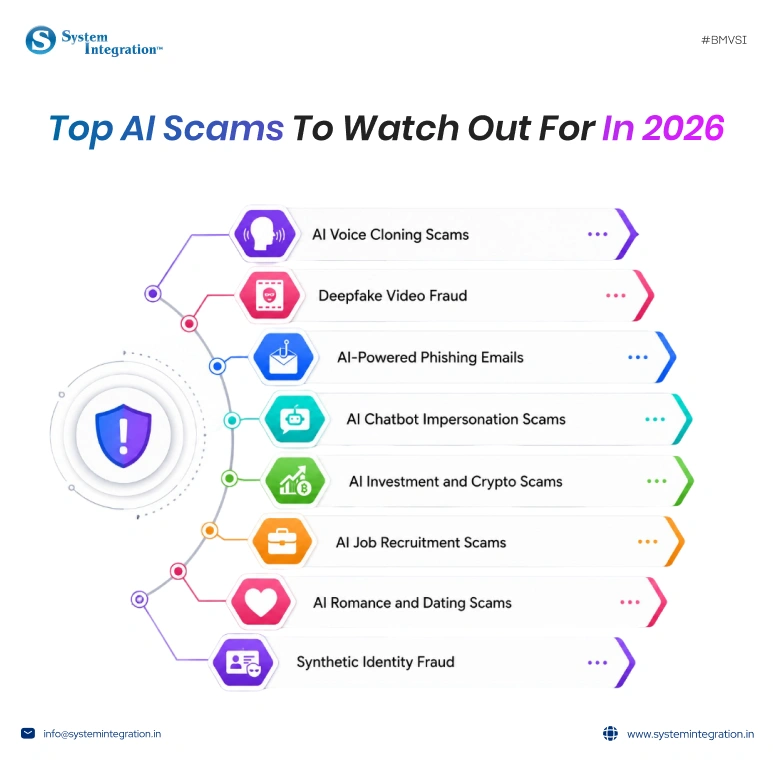
AI Voice Cloning Scams
Scammers have increasingly been using cloned voices from online recordings to pretend to be family members, executives or colleagues of their victims and prompt an urgent payment.
How to avoid: Confirm requests across a different channel or confirm family/ workplace codes.
Deepfake Video Fraud
These fake announcements, investment pitches on various platforms which sounds trustworthy or emergency requests will carry the identity of trusted individuals in videos created by AI.
How to avoid: look for the micro facial features in the video. Check the source of the video, look for inconsistencies and corroborate with official channels.
AI-Powered Phishing Emails
AI generates tailored emails that closely imitate the writing styles of the people you know in the office or on your personal email, enhancing the chances of avoiding credential theft.
How to avoid: Track sender info, do not click on random links and activate MFA (multi-factor authorisation)

AI Chatbot Impersonation Scams
Fraudsters use AI chatbots as fake customer service agents on websites, mimicking banks, or trusted colleagues, social networks, and messaging apps.
How to avoid: Contact companies via official websites, verify the sender’s details and never share sensitive information by chat.
AI Investment and Crypto Scams
They deepfake celebrities and fake experts to promote fraud investment that offer ridiculous returns with risk-free profit. This sounds too real and profitable, and the site looks trustworthy.
How to avoid: Do your research on platforms and verify with other investors, and do not invest in unknown platforms.
AI Job Recruitment Scams
They try to convince you using tools that look like a real profile, and can also draft flawless outreach messages. This type of scam usually aims to steal your money.
How to avoid: Confirm that the recruiter is who they say. No money should change hands in a hiring process.
AI Romance and Dating Scams
The AI profiles form emotional bonds via chats and video calls and ask for money, ultimately, gifts or help with the finances.
How to avoid: never trust someone unknown and chat with them online unless you have met them in person.
Synthetic Identity Fraud
Criminals essentially merge the real with the fake to create believable but fake people for money laundering.
How to avoid: Regularly check credit reports and guard against access to personal information by unauthorized individuals.
AI Fraud Warning Signs
- Desperate Money or Information Emergency
- Often, AI scammers panic the customers by claiming an emergency or a problem with their account and force victims to provide personal data or give money without confirmation.
- Suspicious Links and Attachments
- These scams often contain links or attachments that take the target to a fake site, download malware onto their computer, or attempt to steal logins for account takeover.
- Unusual Voice or Video Interactions
- Deepfake technology enables very realistic-sounding speech and video, but small differences (e.g. voice not matching lip movements), unnaturally behaving individuals or requests that come out of nowhere can be an indicator of fraud.
- Requests to Bypass Normal Procedures
- Fraudsters often prompt victims to sidestep verifying steps, discount company protocols, or bypass traditional safety scanners as a means of defrauding them effectively.
How to Protect Yourself from AI Scams
✔ Trust but Verify
The AI can create emails, messages and even voice calls that sound very realistic and seem to be from people or groups we trust. Never send money or personal information to someone you don’t know. Always check the request through a separate communication channel before sending anything.
✔ Watch Out for Urgent Requests
Scammers will often use fear, a sense of urgency or excitement to pressure victims into acting quickly. If a message requires immediate attention, stop and check before you respond.
✔ Protect Your Personal Information
Never share passwords, banking details, OTPs or personal identification information over email, text messages and phone calls, unless you are sure about the identity of the recipient.
✔ Watch Out for Deepfakes
AI-created videos and impersonalized voices to trick a scammer into looking real. When someone asks you for money or personal information, whether that be a friend, family member or executive director of the church, call them directly or speak with them before engaging with their request.
✔ Use Strong Security Measures
Use strong, unique passwords and turn on multi-factor authentication (MFA). Store your devices and software up to date. A number of such simple practices could help mitigate many risks from AI-powered cyberattacks.
✔ Learn to See New Scam Trends
AI scams evolve rapidly. Keep up to date, find out about the latest phishing techniques, fake job offers, investment frauds, and social engineering tricks so that you are able to detect signposts of an attack anywhere before they can take their consideration on finding victims.
How Businesses Can Defend Against AI Fraud
Strengthen Employee Awareness and Training
- Train your employees on Cybersecurity and AI scams regularly.
- Train your workers on spotting these phishing emails and deep fakes
- Takeout Scam might be running simulations that a scammer imitates a nah sometime in October.
- Encourage people to report suspicious messages / contact requests
Implement Multi-Factor Authentication (MFA)
- Implement MFA on all business-critical accounts
- Implement additional verification steps for money transactions.
- Minimize credential theft and account takeovers
- An exercise such as regularly reviewing and updating the authentication policies.
Confirm requests from Channels: A Control for High-Risk Requests
- Separate channels to verify payment or data requests
- Impose approval workflows on sensitive transactions.
- Contact verification for urgent instructions regarding your finances.
- Do not rely on email, text or only voice messages.
Deploying AI-Powered Security and Monitoring Tools
- Identify suspicious activity with advanced threat detection systems.
- Keep an eye on networks for possible correlations between dubious login attempts and behaviour.
- Leverage AI-based fraud detection solutions.
- Real-time alerts about any potential security threats
Build a Robust Incident Response Plan
- Create specific workflows for responding to instances of fraud attempts involving AI.
- Designate roles and responsibilities that are to be followed during security incidents.
- Test routinely and refine the response plan.
- Keep the backups and recovery system so as not to suffer heavy losses.
Conclusion
Cybercrime losses are expected to hit record levels by 2026. When you receive an unusual request to do something, or receive a request to make a payment urgently, these types of requests are from scammers.
By staying informed and having a secure AI system you business can be safe from this type of scam and can reduce the risk. BMV System Integration can help your business in developing secure applications and stay secure in the increasing AI threats.
FAQs
The most common AI scams will be deepfake video scams, AI voice cloning fraud, phishing emails generated from AI, fake investment schemes, romance scams, and impersonation attacks through AI.
When you receive an unusual request to do something, receive a request to make a payment urgently, or see inconsistencies between the quality of a voice or video, and you would not normally receive these types of requests from the person or business sending the email or text message.
Yes, there are greater dangers. Scammers have become very adept at creating realistic-sounding voice clones of family members, CEO’s, and other prominent public figures to deceive their victims into sending them money or sharing sensitive information.
First of all, if you find you are targeted by AI scams, then stop engaging immediately, contact the party through other verified channels and report that incident to the cybercrime branch and also notify others to stay alert.