Introduction
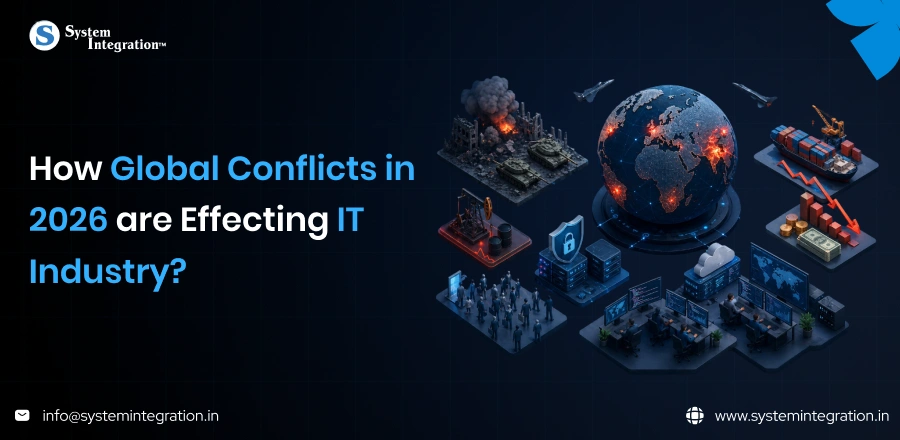
Let’s face it, most people think when they hear “global conflicts” are news debates, not whether their Wi-Fi connection is going to slow down, or projects go haywire. But surprise! The ripple effects even touch your IT team. In 2026, world tensions don’t just remain on the borders; they walk straight into data centres, unfold with supply chains, and once in a while make your cloud bill feel like it’s under siege.
The IT industry, regarded as borderless and resilient, is more correlated with worldwide stability now than ever. From semiconductor shortages to cybersecurity threats and changing outsourcing dynamics, conflicts are reshaping the way tech companies do business. In short, businesses must now move beyond innovation and also factor in geopolitical risk into their playbook.
Find out how global conflicts affect the IT space and how companies can stay prepared, competitive, and future-proof their business.
Key Ways Global Conflicts Impact the IT Industry
- Disruption in Global Supply Chains
Global conflicts are creating severe IT industry disruptions by choking critical mineral supplies, surging raw materials costs like various electronic components, and demanding logistics, forcing firms to rapidly diversify suppliers and diversify shipping routes. - Rising Costs of Technology Infrastructure
Rising costs in technology infrastructure during 2024-2026 are heavily influenced by global conflicts, geopolitical tensions, and resulting supply chain disruption. Geopolitical instability is forcing IT leaders to navigate higher costs for data centres, hardware prices, and the necessity to build secure infrastructure. - Cybersecurity Threats and Cyber Warfare
Global conflicts have transformed cyber warfare into a primary tool for disruption, targeting critical IT infrastructure through state-sponsored attacks and wiper malware. Attacks target software providers and IT suppliers to gain data. - Talent Displacement and Remote Workforce Challenges
Global conflicts like the Russia-Ukraine war and Middle East tensions have fundamentally altered the IT landscape, accelerating talent displacement, disrupting outsourcing hubs, and forcing a re-evolution of remote work security.
Impact on Different IT Sectors
➔ Software Development Companies
World wars are a potential threat to project timelines, operational costs, and availability of talent. Businesses must opt for software consultant service to avoid experiencing delays, security threats and changing client priorities that compel them to quickly adapt.
➔ Cloud and Infrastructure Providers
Geopolitical tensions affect data sovereignty laws, where servers are located and network stability. Providers must ensure compliance, strengthen security and handle demand surge for resilient infrastructure solutions.
➔ AI and Emerging Technologies
While conflicts prompt rapid AI innovation for defence and automation, they will also apply in cooperation and inhibit data sharing. Globally, research and development priorities are affected by ethical concerns as well as regulations and funding.
➔ IT Services and Outsourcing Industry
The political instability, currency fluctuations, and massive workforce disruptions encountered by outsourced countries affect the businesses. To ensure uninterrupted global service delivery to trusted business partners, companies are diversifying geographies, recalibrating risks and emphasising business continuity.
How Global Conflicts Affect Businesses Using IT Services
Over the last decade, technology has shifted from just being purely commercial to deeply strategic. Now, governments also view tech infrastructure as a national asset, and conflicts are increasingly playing out in cyberspace as much as on physical battlefields.
Recent global events such as the Israel-Iran war situation, the Russia-Ukraine war, and China trade tensions have shown that:
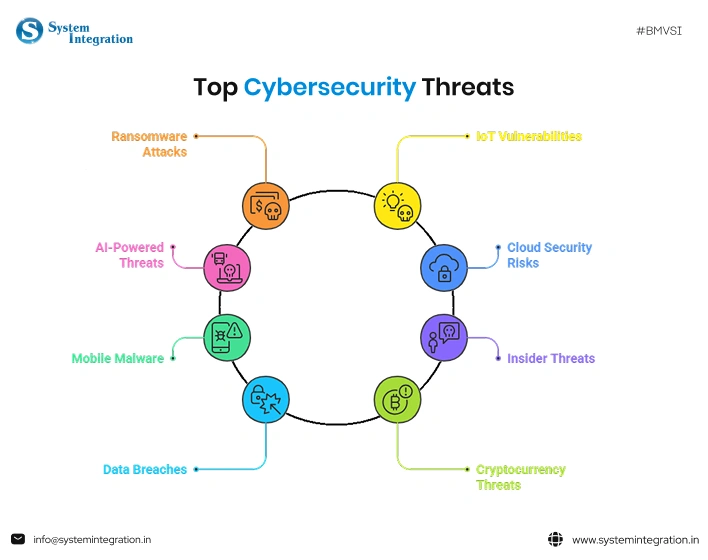
➢ Elevated Cybersecurity Threats: global disputes fuel state-sponsored attacks, espionage, and ransomware aimed at infrastructure, banking, and data.
➢ Supply Chain Disruption: conflicts cause a shortage of IT services like cloud&DevOps and so on, it also causes a shortage of IT hardware, components, forcing organisations to reevaluate reliance on global vendors.
➢ Operational and project delays: economic uncertainty and geopolitical tension often lead businesses to freeze IT spending, delay, or stop non-essential digital transformation initiatives.
➢ Increased regulatory pressure: Governments often implement stricter data protection rules and regulations during global or geopolitical instability, creating compliance pressure for cross-border smooth data flow.
➢ Digital infrastructure risk: key infrastructure, including internet connectivity and data centres, may be damaged or rendered inaccessible, affecting remote operations.
IT Opportunities Created by Global Conflicts
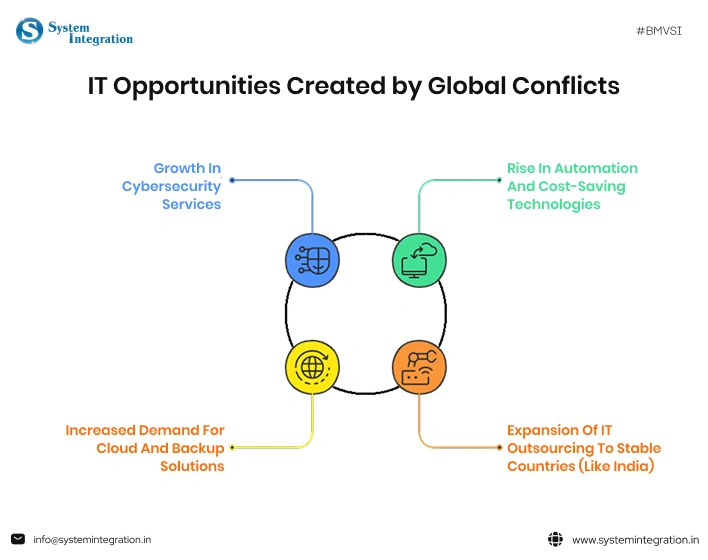
↪ Growth in Cybersecurity Services
Cyber security services are growing fast, driven by global conflicts and growing threats of espionage and attacks on organisations. Businesses everywhere are now investing heavily in threat detection, incident response and resilient digital defence strategies.
↪ Increased Demand for Cloud and Backup Solutions
With companies’ focus on data protection, remote access, and disaster recovery, the need for cloud and backup solutions is only growing. To guarantee uninterrupted operations across the globe, companies are embracing scalable cloud infrastructures and automated backup solutions.
↪ Expansion of IT Outsourcing to Stable Countries (like India)
The global instability is causing the outsourcing of IT services to stable countries such as India, where companies can ensure continuity, AI and ML consulting at cost efficiency and access to skilled resources. Companies are shifting operations to safe areas to address geopolitical risks in a smart way.
↪ Rise in Automation and Cost-Saving Technologies
As organizations try to minimize their reliance on an unpredictable environment, the conflicts push them toward automation and cost-saving technologies. Many businesses adopted new age technologies, including AI, robotics and process automation for better efficiency and operational resilience.
Role of India in the Global IT Landscape During Conflicts
The IT industry in India is a dependable player in the global IT scenario during wartime, with abundant cost-effective solutions and skilled workforce capabilities. Amid geopolitical uncertainties, businesses are increasingly relying on India for continuity, business security and enabling faster digital transformation across the globe.
📌 Availability of educated labor force in IT and engineering
📌 Lower-cost outsourcing relative to Western markets
📌 Enabling a stable political and economic situation for business continuity
📌 Cloud, AI and cybersecurity competencies
📌 Reputations as a global tech outsourcing hub
Future of the IT Industry
AI-Driven Transformation Across Industries
AI will disrupt industries that administer tasks, improving operational efficiency; it also improves the quality of decision-making and the ability to predict outcomes. IT firms will develop more AI-based solutions that will help to boost efficiency, consumer experience and innovation across industries globally.
Cloud and Edge Computing Growth
Cloud Computing will grow more, along with that, Edge computing will be used for Faster Data Processing. The hybrid and distributed infrastructure will be there to meet people where they are, together with ecosystem partner support for real-time applications, low latency, and scaling global digital ecosystems.
Rising Importance of Cybersecurity
With the digital adoption trend skyrocketing, Cybersecurity shall be more in charge than ever before. IT companies will prepare zero-trust architectures, advanced threat intelligence, and proactive defence tactics to protect sensitive data and trust in digital systems.
Automation Growth and Low-Code Platforms
Business workflow automation services and low-code platforms will enable businesses to develop software more rapidly with less code. These tools will be utilised by IT companies to save development time and expenses, allowing low- and no-code users to enhance digital solutions.
Normalized Data and Analytics Demand
Data will remain an asset in analytics due to demand. During dynamic markets, organizations will spend increased money on data engineering, real-time analytics, and business intelligence tools so that they can make informed decisions and deliver competitive advantages.
Conclusion
IT has been impacted by global conflicts directly with a very lingering effect. Cybersecurity threats, changed outsourcing, and the need for robust cloud infrastructure have been a part of business for some time. Businesses partnering with AI software development company using scalable technologies and making their business more secure will help businesses to ease-out uncertainty.
Meanwhile, developments in global IT stability will still massively depend on regions such as India. Organizations with fast adaptability to risks, transforming threats to opportunities, through innovation and effective strategy planning, are the ones in control of a better tomorrow.
FAQs
Global conflits significantly effects the IT indusctry in many ways. Here are the key effects of global conflicts on IT industry.
- Cybersecurity escalation
- Supply chain disruption
- Infrastructure threats
- Increasing need for secure services
- Economic uncertainty
- Strategic repositioning
Cyberattacks, such as data breaches and ransomware, are another consequence of conflicts. The organizations need to enhance their security frameworks so they insurance helpless information and smooth working.
Companies opt for outsourcing to stable countries to have fewer hazards. Reliable infrastructure, a skilled workforce and lower-cost IT services keep countries like India at an advantage.
It services as critical lifeline during tumultuous times by enabling busienses continuity, remote workforce flexibility, and rapid cost adjustments. It removes the reliance on physical, on-infrastructure, allowing organizations to operate from anywhere.