
0–85%
decrease in Average Research Time
0%
reduction in Manual Effort
0%
reduction in content creation time
0%
decrease in documentation error
PROJECT OVERVIEW
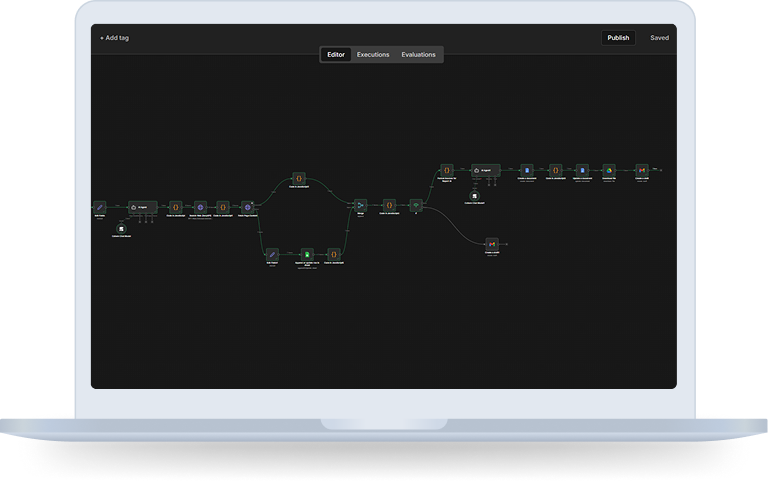
The n8n Smart Research Automation solution is an AI-powered workflow designed to eliminate manual research effort and transform how businesses, analysts, and professionals generate structured research reports.
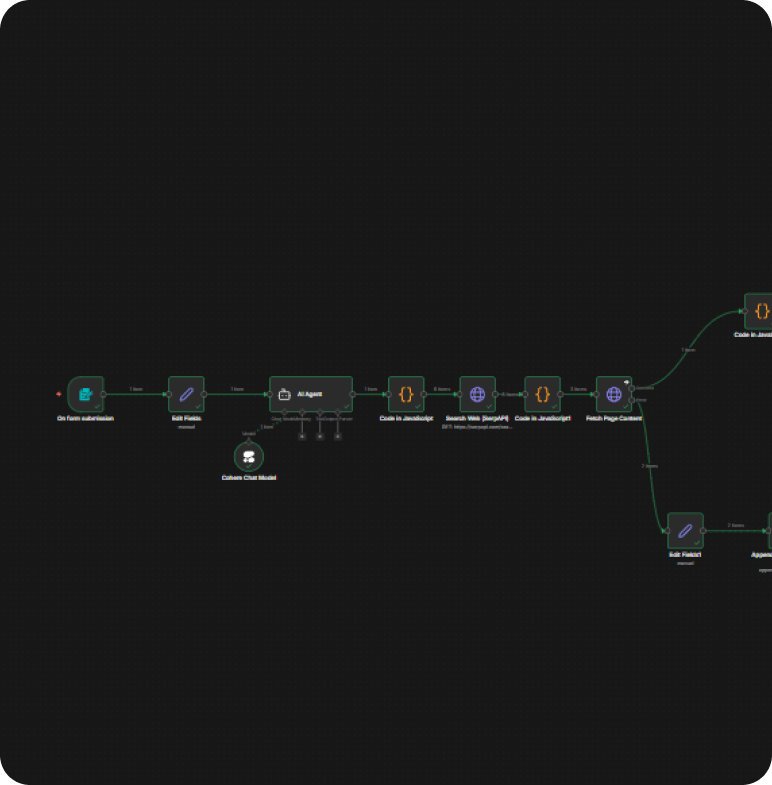
The automation collects a research topic through a submission form, intelligently generates targeted search queries, fetches authoritative sources, synthesizes insights using AI, and automatically creates a professionally formatted Google Docs research report delivered directly to the requester via email.
This solution enables faster, more structured, and scalable research operations without requiring human intervention at every stage.
Objectives

Automate the entire research lifecycle from topic submission to report delivery

Reduce manual research effort by over 70%

Ensure structured and professional report generation

Standardize formatting and documentation quality

Improve turnaround time for research requests

Enable scalable research generation for teams and organizations

Automatically store research in Google Docs for record-keeping
The Challenge
Organizations frequently face challenges such as:
Manual research workflows often consume several hours per request, especially when verification, consolidation, and formatting are required.
THE SOLUTION ARCHITECTURE (HOW DOES IT WORK?)
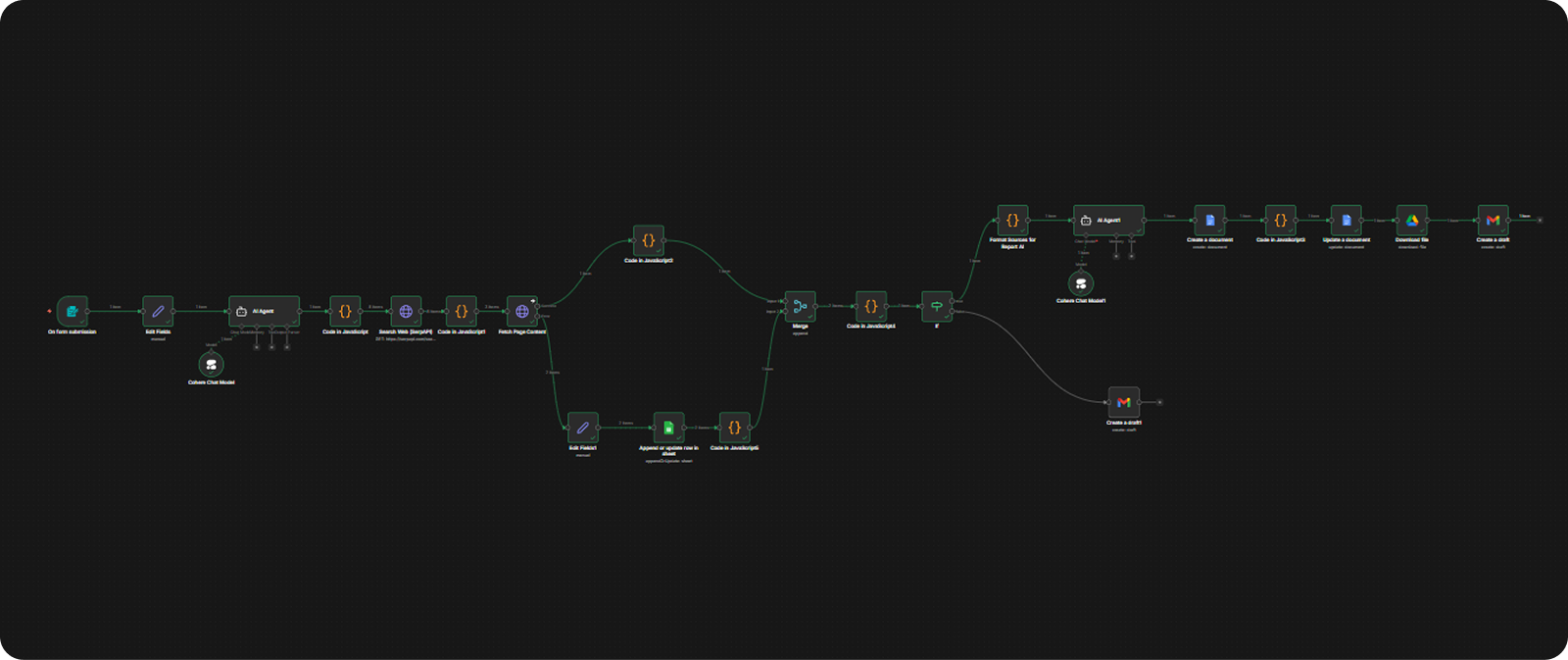
The workflow is built using n8n, integrating AI and external services to create a seamless automation pipeline.
How does it work?
Step 1: Smart Research Submission Form
Users submit research details via an n8n form:
- Research Topic (Required)
- Research Depth (Quick / Standard / Deep)
- Email for Results (Required)
The submission triggers the workflow automatically.
Step 2: Intelligent Query Configuration
Based on the selected depth:
- Quick → 3 queries
- Standard → 5 queries
- Deep → 8 queries
An AI agent generates structured search queries covering:
- Latest developments
- Expert insights
- Statistical reports
- Historical context
- Future implications
This ensures comprehensive coverage of the topic.
Step 3: Automated Web Research
Using SerpAPI, the workflow:
- Retrieves top search results per query
- Filters out non-authoritative domains
- Extracts title, URL, and snippet
- Selects top 3 relevant results per query
Step 4: Content Extraction & Cleaning
The system:
- Fetches page content via HTTP requests
- Removes HTML, scripts, and style elements
- Extracts up to 3000 characters of clean text
- Captures canonical URLs
Duplicate sources are removed automatically.
Step 5: AI-Powered Report Generation
Using Cohere, the collected sources are synthesized into:
- Structured professional report
- Plain text format
- Uppercase section headings
- Logical content flow
- Neutral research tone
The report maintains consistency and readability across all requests.
Step 6: Automatic Document Creation
The workflow:
- Creates a new document in Google Docs
- Titles it: Research Report:
- Inserts AI-generated content
- Prepares document for sharing or attachment
Step 7: Conditional Handling
If sources are found:
- Report is generated
- Email draft prepared
- Document attached
If no valid sources are found:
- A “Research Failed” email is sent with suggested refinements
Step 8: Email Delivery
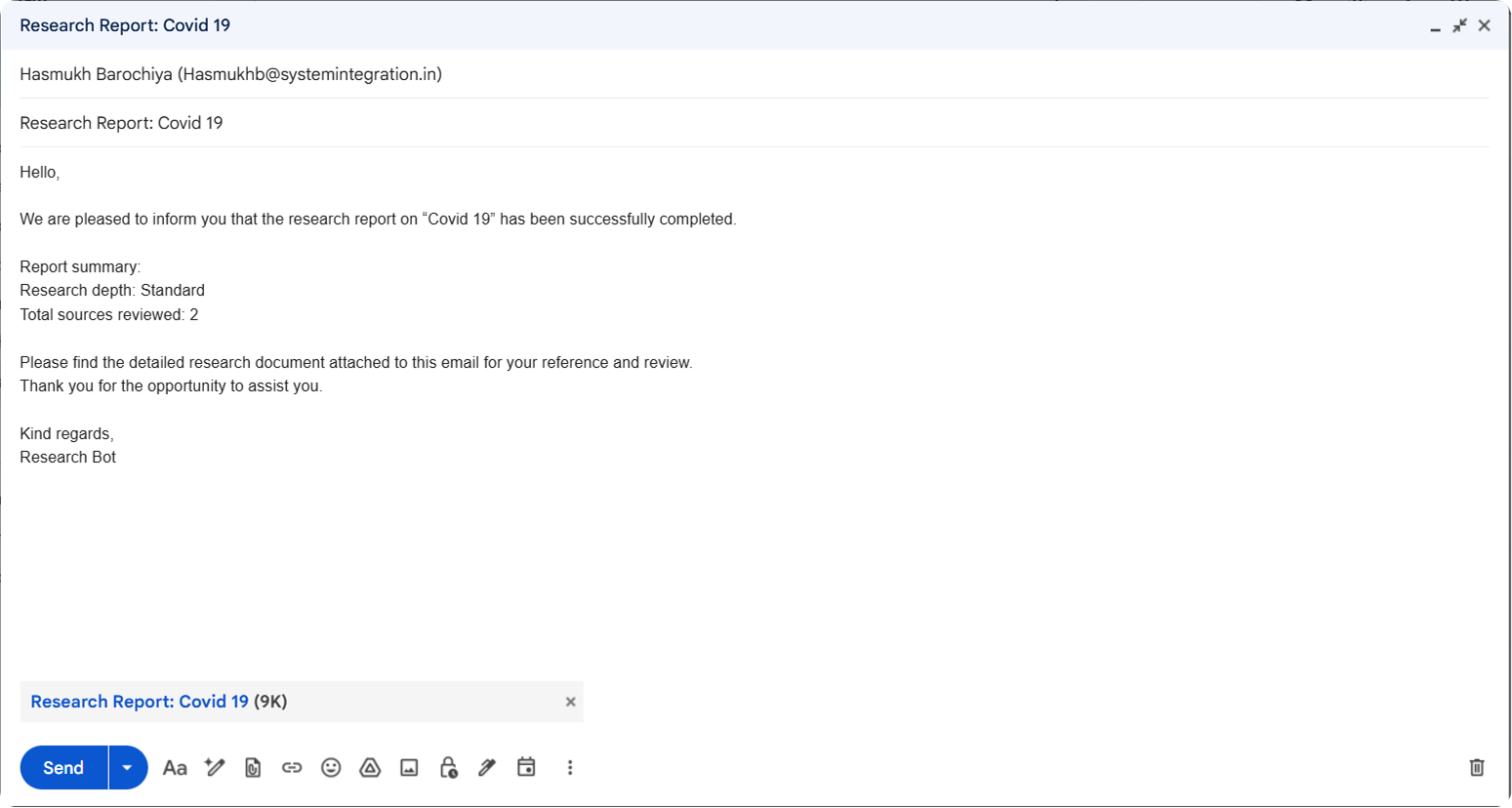
Using Gmail, the system:
- Sends draft email to requester
- Includes topic and research depth
- Attaches Google Docs report
- Mentions number of sources collected
Technology Stack Included
Key Benefits
End-to-end automated research workflow
AI-powered structured report synthesis
Automated Google Docs creation
Intelligent source filtering
Email-based report delivery
Zero manual intervention post submission
Scalable for enterprise usage
The Solution Is Ideal For
Download The Case Study
You’re one step away from building great software. This case study will help you learn more about how BMV System Integration helps successful companies extend their tech teams.
Enter Your Detail
Closure
The n8n Smart Research Automation demonstrates how AI-powered workflows can modernize traditional research processes. By combining automation, intelligent search generation, structured content synthesis, and automated documentation, organizations can significantly reduce effort while increasing research quality and speed.
This use case highlights the power of workflow automation in creating measurable operational efficiency and scalable business intelligence delivery.
