
Introduction
Ever since the chatGPT has been launched in the year 2022, the pace of change in the businesses has been overwhelming. The AI and its constant updates for businesses are massive. In short we have all the answers to the queries. And businesses are the one getting most of the benefit from AI’s launch.
Infact, according to the reports around 85% of the companies are planning to increase their AI investments over the next few coming years. Also at the same time many businesses are already seeing some captivating results. This is due to the fact that AI helps in increasing the productivity and efficiency of the business and that too into the budget.
This shift is very profound, and firms are applying AI automation in its multiple operations and making most of it. Therefore, let’s dig deeper into this blog further on how multiple successful businesses are using AI to increase their profitability.
What is AI?
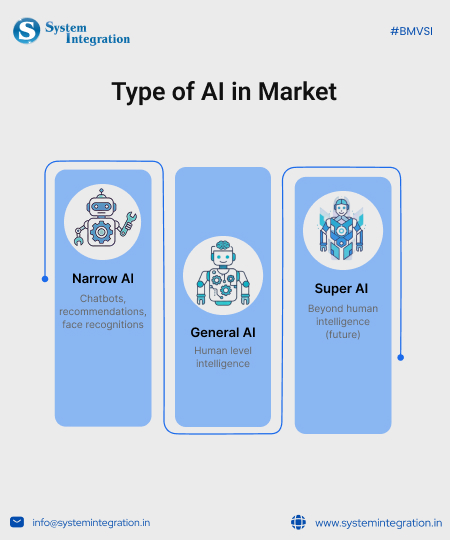
AI represents the artificial intelligence that acts like humans and engages into the activities or tasks and performs to automate the process for less human dependency and increased convenience and accuracy. This includes learning, planning, performing multiple complicated steps or even simple tasks like answering users’ queries like AI chatbot for businesses in generative format is the most common one.
Common example of AI
- machine learning(ML): algorithms that finds patterns in the large data sets that it has access to, for making the prediction(Netflix recommendation).
- Deep Learning(DL): a subset of ML using neural networks(like human brains) for complex pattern recognition.
- Generative AI: creates the new content like text, image, video or codes based on the prompt it gets(chatGPT).
- Natural language processing(NLP): it helps computers understand and generate human language.
AI in Business: How Companies Are Using It To Scale Smarter?

Customer Experience & Hyper Personalization
By understanding customer behavior and analyzing intent, AI is able to do personalized recommendations and intelligent chatbots, allowing brands to deliver smooth experiences that enhance satisfaction, build long term loyalty.
Effect on the brand
- Higher customer satisfaction and loyalty
- Error reduction & Improved lifetime value
- Consistent brand experience everywhere, maintaining consistency of the brand.
Marketing, Growth & Brand Visibility
Predicting which platform and content a consumer should be shown on before they even see it using the data, especially if automation is involved; this enables brands to ensure that their displays, targeting or campaigns are maximally optimized for quick turnaround and high RoI.
Effect on the brand
- Faster campaign execution
- Improved ROI on marketing spend
- Increased trust of the brand through multiple channels
Product Development & Innovation
Start ups use AI to analyze customer feedback, usage data and market signals to enable smarter product decisions and faster time to market, higher adoption rates and better fitting services to real customer needs.
Effect on the brand
- Shorter time to market
- Higher product adoption rates
- Service meets the needs of customer requirements
Decision Making & Strategic Intelligence
Real time insights, forecasts and scenario analysis, By providing this type of support for decisions in minutes or hours not weeks, and dynamic incorporating data from diverse sources, it can help businesses make better and informed decisions with less uncertainty across more strategic paths more often.
Effect on the brand
- Improved strategic alignment
- Reduced uncertainty in decision making
- Stronger long term planning
Brand trust, data security and risk management
AI watches for threats, identifies fraud and keeps brands compliant, securing data, reducing risk, creating customer trust and establishing long term credibility in competitive digital spaces.
Effect on the brand
- Increased customer confidence
- Lower brand risk and compliance concerns
- Stronger long term brand credibility
Operations, Automation & Efficiency
With automation of workflow and demand forecasting, AI optimizes operations, reduces costs, speeds up execution and enables brands to scale efficiently without adding operational complexity or bottle necks.
Effect on the brand
- Reduced operational costs
- Faster internal execution
- Scalable business models with no bottlenecks
What AI actually does well and what it does poorly
What AI Does Well
- Is able to process high volumes of data in a few seconds with accuracy.
- Its very good at doing things that are rules based tasks.
- Finds patterns and trends that are hard to find otherwise.
- Provides rapid predictions and forecasts of historical data.
- Automates processes to help you run faster and leaner.
What AI Does Poorly
- Is struggling to understand actual context and cultural subtleties.
- Falls down in ambiguous tasks with unclear reference rules or targets.
- Does not have real insight, and it cannot use common sense in thinking.
- Falls apart when confronted with entirely new situations where there isn’t much data to go on.
- Needs a lot of human agent bird eye view to not be overconfident and wrong.
| The Real Power: The Combination of Human & AI The successful organizations don’t ask AI to replace humans. They build systems where AI does scale and automation while humans do strategy, creativity and judgment. That balance is where AI is most valuable. |
Biggest Challenges Businesses Faces While Using AI
Poor Data Quality and Fragmentation
A lot of companies are challenged by incomplete, inconsistent data which adversely impacts AI accuracy and yields biased results, meaning models won’t provide reliable insights or have meaningful automation across multiple departments.
→ Solution: Consolidate data sources, enhance data governance, clean historical sets and implement ongoing data quality monitoring before scaling your use of AI models.
Non clear Business Use Cases
Organizations who adopt AI with unclear goals and objectives often suffer from misaligned implementations, low ROI out of their investment efforts, a long list of abandoned tasks and most importantly lacking an understanding as to what AI even is to begin with.
→ Solution: Begin with very specific business problems and quantify the success metrics, ensuring AI initiatives are tied in directly to goals for operational efficiency, revenue growth or customer experience.
Integration with Legacy Systems
AI tools often find it difficult to natively interface with legacy software, workflows and infrastructure, leading to delay, higher costs and isolated automation sequestered from enterprise wide usage.
→ Solution: Leverage APIs, middleware and low code automation platforms to integrate AI with existing systems as infrastructure is modernised piece by piece rather than completely replaced.
Skills Gap and Change Resistance
But AI simply isn’t getting into their hands, employees may not be equipped with the knowledge to use AI, or are scared that it will replace them in doing their jobs, which can result in lack of deployment and compromise for available AI tools, as well as lost potential for productivity and innovation.
→ Solution: Invest in AI training, encourage human in the loop collaboration, and transparently explain how AI is an aid to employees, not a replacement.
Ethical, Security, and Compliance Risks
Unmanaged AI can create them risks of data privacy, decision making with bias and regulatory compliance or securities hole.
→ Solution: Implement AI governance, transparency measures, compliance guidelines, take frequent audits, and keep human oversight in place for mission critical or sensitive decisions.
Conclusion
The AI and its constant updates for businesses are massive. This shift is very profound, and firms are applying AI automation in its multiple operations and making most of it. This is due to the fact that AI helps in increasing the productivity and efficiency of the business and that too into the budget.
However, collaborating with the best AI software development company is very vital for this objective as they have a team of experts who can help you and make your whole development process smoother and assist you in improving your customer experience by furnishing a proficient solution.
FAQs
Yes. AI allows companies to automate routine tasks, analyze large volumes of data quickly and work 24/7 without downtime, achieving operations, marketing and customer support scaling without increasing targets or headcount at the same speed.
AI increases job mobility rather than erasing jobs. It takes over repetitive tasks, but leaves us with new roles around strategy, oversight, creativity and AI system management.
AI systems learn from data. Low quality, biased, or incomplete data restricts the predictability of models, can impact automation efforts and may destroy trust in AI driven decision making.
Through application program interfaces (APIs), middlewares, and automation platforms, companies can integrate the AI tools with existing systems.
It’s best to start by finding a high impact, low risk process that AI can automate work on or give insights into and scale slowly from there based on measurable successes.
So if AI and machine learning can manage speed, scale, and automation while human beings concentrate on creativity, strategy, imagination, as well as decision making then companies can really increase enough effectiveness to achieve success at higher levels of performance with superior outcomes not forgetting stable future growth.