
Introduction
Let’s face it, who carries cash anymore, apart from a meal of street food or an emergency? We tap, scan and transfer money more quickly than we respond to texts🤪.
Which is why secure payment app development isn’t just a new wave of tech, it’s a digital gold rush. With the growing demand for payment apps, developing one has become an attractive business opportunity to increase your user base, build strong relationships with users and increase retention rate.
More than 2.7 billion people used mobile payments in 2024, and China has the most usage by country, with 96% of the adult population using mobile payments.
Wrapping it up: it’s great that the market is booming, but so are cyber threats. That’s the reason security is not a choice; it’s the basis. In this guide, we’ll walk you through the ins and outs of building a payment app that is speedy, mobile-friendly and secure, or we can say hacker-proof😌.
Let’s Understand the Flow of the Payment App
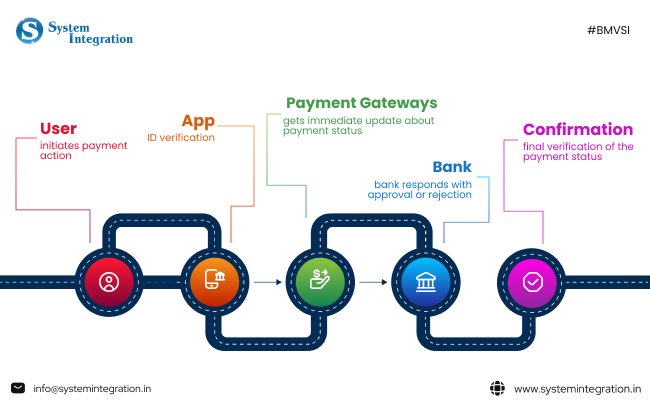
User ➞ app
The app captures the payment request and the authorization and verifies the user by entering pin or biometrics. No sensitive data is captured locally.
App ➞ Payment Gateways
The payment process is routed to its gateways, and it’s also encrypted. It also handles tokenization, transaction and regulatory checks.
Gateway ➞ bank
The gateways then transfer the payment request to its linked bank for processing validation, to check the validity of the balance and to check other risk factors related to the transaction.
Bank ➞ confirmation
After calculating all the factors, the bank responds with approval or rejection. This is sent back to the payment app and reflected in real-time.
Top Features to Include in Payment Apps
| Features | Why they are must have |
|---|---|
| Secure authentication | Controls access using PINs and multi-factor authentication |
| Multi-currency support | Decreases the language barrier and enhances the user base of your app |
| Biometrics verification | Secure the app from any frauds |
| Real-time alerts | immediate notification for transactions |
| Data encryption/compliance | Protect the sensitive transaction information |
| Transaction history | Track all the transactions for financial management |
| Digital wallet support | Offers convenience and ease of instant transactions |
| Billing/payment invoice | Helps in tracking the past payments |
Best Online Payment App for Small Business
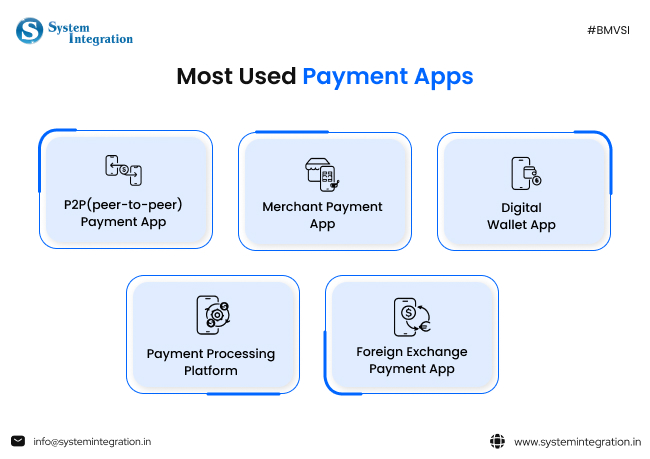
1. P2P(peer-to-peer) Payment App
A P2P payment app refers to the direct transfer of money from one individual to another using digital platforms or apps. Money is transferred in real-time or transactio reflects in a few hours.
Key features
- User registration and ID verification
- Can transfer money to friends and family directly
- Instant peer-to-peer transfer
- in-app wallet for more convenience
- Can link a bank account or card
Use cases
- You can share or split the bill with friends
- Send money instantly in emergency cases
- Can receive or pay rents instantly
- Hassle free instant payment while shopping
2. Merchant Payment App
Customers can directly pay the merchants via online payment platforms, skipping traditional offline payment methods. It can be done by typing the phone number or scanning the QR code.
Key features
- Business account setup and verification
- Sales analytics and information
- Transfer in real-time into merchants bank account
- A merchant can link multiple bank accounts
Use cases
- Cafes can get money directly into their account
- Retail stores with their QRcodes at the counters
- Restaurants allowing table-side QR or number payments
3. Digital Wallet App
Digital wallets are secure and store payment card information, which enables smooth online transactions. User verifies by biometrics, or by PIN and makes the transaction and the merchant receives it without being able to view their card and other sensitive details.
Key features
- Digital wallet supports multiple card linking
- Secure card storage with toknization
- You can store money in the digital wallet
- Avoid sharing sensitive details of your bank account
Use cases
- Grocery shopping with a tap-to-pay at the checkout
- Doing online shopping and making transactions from your wallet
- Subscription to any online platform and auto pay from the wallet
4. Payment Processing Platform
A payment processing platform connects the business to the payment network, enabling secret payments between payer and payee by connecting with the financial network. This type of process handles the whole transaction process just between payer and the payee.
Key features
- Its one of the fastest methods to transfer money.
- It supports multi-currency and multi-language.
- Automated billing for subscription for monthly service.
Use cases
- Smoothly streamline the service of subscription.
- Users can pay contactless and securely without any hassle in real-time.
- Mostly, these methods are used for paying for the monthly electricity bill, internet recharge, and stuff like that.
5. Foreign Exchange Payment App
This is very helpful in cross-border money exchange with minimal hassle. In this, the user enters the amount of money and their currency type, the country and its currency they want to exchange, and it’s done within minutes in real time with the exchange rate upfront.
Key features
- Transparent currency exchange rates and no frauds init.
- Its capable of holding multiple currencies in its wallet.
- Supports multiple languages for the convenience of the users.
Use cases
- It helps when you are in the new country and want to exchange.
- You can send the money to your friendy and family members across the world.
- You can operate the app and exchange the money in your preferred language.
How Much Does it Cost to Build Payment App
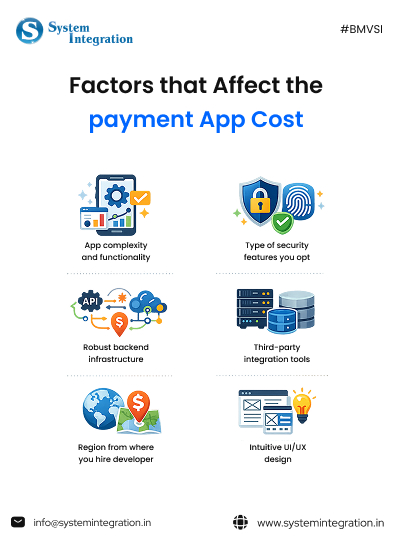
The most easy way and straight forward way to understand payment app cost is the type of app or the complexity you want in it. As each type of payment app cost different budget and also your requirements makes the difference.
| 👉 Basic payment app = approx cost range is $ 30,000 to $ 70,000 👉 Mid-level payment app = approx cost range is $ 50,000 to $ 150,000 👉 Enterprise-level payment app = approx cost range is $ 150,000 to $ 200,000 👉 Highly complex payment app = approx cost range is $ 200,000 to $ 300,000 |
Each type of app development process takes different time as per the requirements and the region from where you have hired the developers matters and how much experience they hold will also affect the speed and quality of your app development process.
Why Build Online Payment App with BMV System Integration
Creating a secure and safe online payment app means understanding the complexity of the app thoroughly and also comprehending the requirements of the clients. This is vital for creating a cutting edge app in the competitive market.
By collaborating with BMV System Integration, best mobile app development company in india you get to work with the team of expert developers who comprehend your requirements of payment app properly and develop a powerful app that is capable to scale with increasing userbase.
Concluding Part
Online payment app development market is booming, but so are cyber threats. That’s the reason security is not a choice; it’s the basis. This is where, partnering with the best AI software development company comes in. as its experienced and knowledgeable to create a secure app that is also scalable even when the userbase increases without any downtime.
FAQs
It depends on the type and complexity of the app you want to build. It also depends on the kind of development firm you collaborate with and what tech stack they are using.
The cost of the app depends on the type of payment gateways you are using. Also, the complexity of the app majorly affects the cost of the development, for eg, a basic payment app, mid level app and a complex app, all of them costs different.
The answer relies heavily on what your needs are. You need to decide on the target user of your app that you want to develop. Accordingly, choose the type of gateway.
There are multiple sources of income, like transaction fees, premium subscription options, and business access, like API, which also creates B2B revenue. And many more earning streams can be created, and it totally depends on the company.