
Introduction
In 2026, building software is a bit like ordering coffee. ☕
Do you prefer instant, ready-to-grab coffee and get rolling in just minutes? Or do you go full barista mode (custom development), grinding beans, foaming milk and creating something that tastes like it’s uniquely yours?🤔
What today’s businesses are dealing with is no different.
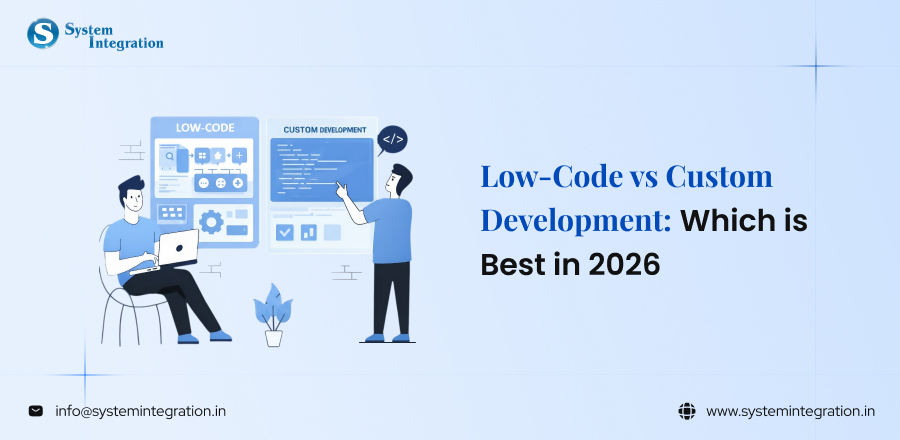
Low-code platforms profess speed, lower costs, and fewer headaches, which are great for getting MVPs to market faster, automating processes or running ahead of others in your industry. Custom development, meanwhile, gives you total control, the wide expanses of “you can do anything with it,” and that harmonious feeling of “built exactly for me.”
But here’s the catch: what works for a beginner might not work for an enterprise managing complex integrations and massive data loads.
So, which process to follow in 2026? Is speed master, or does flexibility reign? In this blog, we’ll do a deep dive into pros and cons, the costs involved in setting up and maintaining those systems, real-world scenarios, and help you choose the road that’s truly aligned with your business goals (and budget). 🚀
What is Low Code Development?
With their approach to building applications, low code platforms reduce the need for manual coding. It allows developers and tech savvy business users to create apps using drag and drop tools, reusable components, and built in automation.
“Low code is visual and collaborative way to develop and deploy software application”
Instead of the technical coding environment required by traditional development. Low code abstracts and automates every step of the software development lifecycle in an intuitive, model driven, drag and drop attribute.
low code automation is best suited for non technical users, empowering people of all skill levels to build value driven busienss applications.
| Why does it matter to you? 📌 For IT Leaders: it means faster delivery and a reduced backlog without compromising security or governance. 📌 For Architects and developers: it means fewer repetitive tasks and more time for high-impact coding and strategic projects. 📌 For Business Users: it means the power to solve problems and launch applications without waiting on development cycles. |
Low Code No Code Development: Key Differences
| Element | Low Code Development | Code |
|---|---|---|
| Technical Skills Required | needs: fundamental to progressive programming Knowledge | No coding knowledge required |
| Customization & Flexibility | Great flexibility and support for custom code | Restricted to platform functionality and prescripted templates |
| Target Users | Developers & IT teams | Business users & non-technical teams |
| Scalability & Complexity | Suitable for complex, enterprise-grade apps | Ideal for workflows, MVPs, and easy mobile apps |
What is Custom Software Development Service?
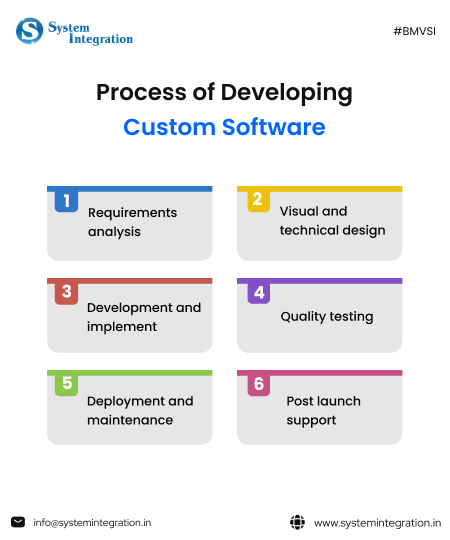
Type of Custom Software Development Service
➡ Custom Software Product Development
As a trusted custom software development company, we turn your business ideas into powerful software products. Every feature is designed to match your workflows, improve user experience, and add measurable value to your goals.
➡ Legacy Software Modernization
It gives your old systems a new life! legacy software modernization upgrade, refactor, and modernise your legacy software to align with today’s technologies, helping you enhance performance, security, and ROI.
➡ Cloud Application Development
Scale your business smarter with our cloud-based solutions. Cloud application development helps in building reliable, secure, and high-performance applications that keep your operations flexible and cost-efficient.
➡ Custom Web App Development
Your website should do more than just look good, it should perform. Partnering with custom website development services makes responsive, fast, and secure web apps that handle high traffic effortlessly and keep users coming back.
➡ Custom AI in Mobile App Development
AI in app development services combine intuitive design, setting automation for repetitive tasks, strong performance, and business-specific features, helping you boost engagement and deliver results that matter.
➡ SaaS Development Services
This service lets you launch your own product. Developers builds secure, scalable, and user-friendly SaaS platforms with advanced features like subscription management, analytics, and automatic updates.
How custom software can help improve your business efficiency
- Customised for Your Unique Business Requirements: Custom software is also developed around your workflows, goals, and challenges. It builds on itself, getting rid of the bloat common in generic tools and only focuses on what your team actually needs increasing productivity overnight.
- Automation of Repetitive Tasks: Custom solutions automate routine processes from data entry to reporting and approvals. It cuts down on manual errors, frees up time, and enables your team to work on higher-value strategic projects.
- Seamless System Integration: Whether in CRM, ERP or accounting tools, integrations of third-party APIs are easy with custom software. This allows seamless flow of data across departments and breaks down the information silos.
- Better Scalability as You Grow: As your company grows, so can your software. Custom solutions offer configurability, enabling new features, user roles, and integrations without disrupting ongoing operations.
- Enhanced Security & Data Control: Custom software adds stronger security measures that meet your industry requirements ensuring sensitive business data remains secure and compliant with full control over architecture and hosting.
Low Code VS Custom Development: Key Differences
| Element | Low Code Development | Custom Development |
|---|---|---|
| Development Speed | Visual constructors and ready-made modules for faster development. | Emphasis on detail due to heavy architecture planning and writing from scratch |
| Customization Level | platform capabilities are restricted with some code extension | Complete customization that fits the unique business need |
| Cost Structure | Less upfront cost with possible ongoing costs in the form of Platform Subscription Fees | More costly from the start but no platform dependency fees |
| Scalability & Performance | Well-suited to modestly complex applications; performance limited by platform limits | Designed for distributed and real-time processing. |
How to Choose the Right app Development Approach in 2026
➢ Define core functionalities: determine if the app relies on high-level device hardware(camare, sensors) or if it is content-focused.
➢ Evaluate team skills: check and train your team to work with the latest technologies which are needed for custom app development.
➢ Scalability and future proofing: the chosen architecture must allow for easy, long-term growth and handle increased user loads without requiring massive, expensive redesign.
➢ Security and compliance: with increasing security concerns, the approach must support top-tier security, including end-to-end encryption, multi-factor authentication, and compliance with regulations like GDPR, 2 factor authentication and more.
➢ Development team capabilities: the expertise of your team (in-house vs out-source) in specific technologies (e.g., native kotlin/Swift) will heavily influence the success of the chosen approach.
Wrapping Words
Low-code platforms profess speed, lower costs, and fewer headaches, which are great for getting MVPs to market faster, automating processes or running ahead of others in your industry. Custom development, meanwhile, gives you total control, the wide expanses of “you can do anything with it”.
And after the above discussion, you will be sure of which to choose for your software development process. However for having the competitive edge in the market, partner with the best AI software development company that provides scalable solutions with full customization throughout the process.
FAQs
If you have any unique requirements for the development process than custom development would be better. Choose low code, if you do not have complex app development requirements and also want to complete in a specific time.
Major risks include lock-in, limited customization abilities, can’t develop a complex features application and also potential performance issues.
Start by incorporating AI into not-so-complicated tasks, and also use pre-trained AI models instead of making one from scratch. Adopt a low/no-code development process.
A hybrid approach uses low code for quick, simple components while employing custom development for complex, core, or high performance, and scalable features.