
Introduction
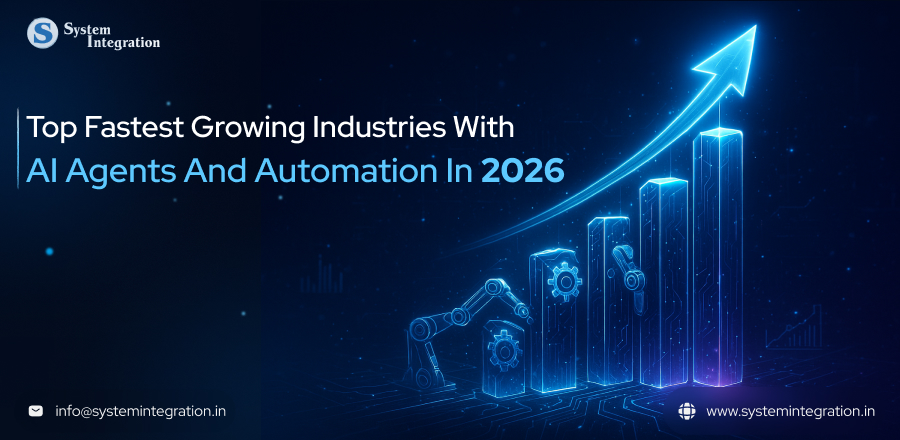
As we head into 2026, AI agents and automation are no more futuristic concepts. What started as simple automation in the work is now transformed into intelligent systems, that does things on their own and even makes decisions, predict and take actions according to the workflows.
Businesses, from factory to banks, and from hospitals to stores, are quickly adopting AI agents in their daily operations. Thereby massively reducing the amount of repetition of necessary tasks for humans, enabling efficiencies which were not possible before, and unlocking entirely new revenue streams.
The industries that lead the charge and adopt these technologies early won’t merely make themselves more efficient, but they’ll redefine customer experiences, enhance resilience and establish new benchmarks for productivity.
This guide takes a look at the industries that stand to gain the most from AI agents and automation in 2026.
The Growing Impact Of AI Agents And Automation In Industries
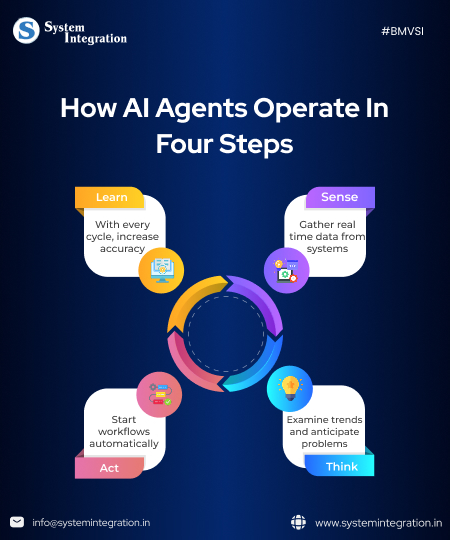
What is transformative about AI agents is that they have ability of self learning. They don’t just follow a static set of instructions, they observe real time data, anticipate issues before they happen and adjust their activities on in real time. Now these AI agents can think and act, working together over systems, to provide operations with very little human involvement. This paves the way for a new era whereby businesses can work with:
- Zero delays in decision making
- Highly optimized processes
- Reduced dependency on manual supervision
- Consistent quality across operations
Firms that are quick in implementing AI agents for automating the workflow are witnessing more productivity, reduced costs and heightened productivity, and more importantly, they’re gaining a strategic advantage in increasingly competitive markets.
Top Industries Benefiting From AI Agents And Automation

Healthcare: transforming patient care and diagnosis
AI agents minimize diagnostic mistakes, expedite clinical judgments and relieve doctors of routine paperwork. The result is that automation allows hospitals to lower wait times, and improve patient experience, all without the need for additional staff.
-
Key applications in healthcare
- AI diagnostic support in Medical imaging analysis, early disease screening, anomaly detection (X-rays, CT, MRIs).
- Digital health assistants for Patient triage, symptom checking, appointment scheduling.
- Automated clinical documentation and Real time transcription & summarization for doctors.
- AI care coordination agents takes follow-ups, Personal medication reminders.
- Streamlining work flows in a hospital like Bed control, patient information, billing and insurance claims.
Finance: streamlining operations
Accuracy is very crucial in banking and financial sectors. Artificial intelligence automate manual review workloads at scale, from KYC verification to risk scoring, providing for adherence and minimising the operational burden. Smart automation also helps in the prevention of fraud by noticing suspicious activities at run time.
-
Key applications in finance
- Automated monitoring systems and methods of automated transactions monitoring for fraud detection.
- AI agents for KYC related user queries etc, onboarding, and account servicing.
- fetching various vital details of customers and analysing with predictive risk models.
- Algorithmic trading & portfolio optimization like for strategies thinking, predictive analysis, and machine learning.
- furnishing virtual assistance enhances user experience by providing support 24/7.
Retail & E-Commerce: personalized Customers journey
The success of retail is built on personalization and speed. AI agents automates everything from customer engagement to warehouse management. The use of an automated demand forecasting process decreases stockouts and overstock, which in turn enhances cash flow. Shopping assistants meanwhile bring Amazon like functionality to every brand.
-
Key applications in Retail & E-Commerce
- AI analyses customer’s shopping history and recommends based on it.
- Dynamic pricing like adjusting the prices in real time based on the market, demand of a product and user data.
- AI chatbots give immediate assistance to customer queries giving better experience.
- It predicts future demand for product or services by analyzing real time and historic data
- Gives precise demand prediction based on the real time data available resulting in lean inventory.
Real Estate: giving Property Sales a modern touch
AI agents increases lead generation by automating questions and property recommendations. For property owners, automation decreases operational expenses by taking care of tickets, rent reminders and maintenance flows. AI analytics also assists investors in making intelligent decisions more quickly.
-
Key applications in Real Estate
- 24×7 lead qualification through AI driven virtual assistants.
- AR/VR helps potential buyers to view property virtually from anywhere.
- Virtual staging property tour for better understanding for customers.
- Intelligent property management agents dealing with inquiries, rent reminders and much more.
High AI Skills Demand In 2026
As companies are adopting automation at scale, operating AI agents, and install predictive systems that are more accurate than we can even imagine today, the need for people who understand AI better and know how to operate it will increase.
Companies will require people who can build and operate AI models, as well as experts who can use the technology in business processes. Skills such as
- machine learning(ML) engineering
- Generative AI
- AI workflow automation (leveraging n8n and Zapier)
- Natural language processing(NPL)
- Cloud computing
- Data analysis
This will be some of the most in demand set of technical skills.
And it’s not limited to technical positions only. Product managers, marketers, designers and analysts alike will be required to understand not only how AI systems operate but fit into business initiatives. Otherwise, competitors will go faster by upskilling with AI, lower operating costs and produce better products.
Why Businesses Must Invest In AI Training
- Boosts productivity and efficiency: it assists employees to learn and automate unproductive tasks, making them free for complex, creative work, which needs strategic thinking.
- Enhances employee retention and engagement: offering growth in AI skills signals commitments, increases job satisfaction, reduces turnovers, helps in attracting more potential employees that are looking for future proof skills.
- Reduce the errors and risks: AI helps in reducing the human errors and increases the accuracy of the data. While even boosting the cybersecurity and neutralizing the threats by detecting the potential attackers.
- Future proof of your workplace: as AI has become a vital part of daily workflow, training your employees ensures roles and responsibilities evolve and not replace them and enables them using the latest technology AI tools.
Conclusion
What started as simple automation in the work is now transformed into intelligent systems. Businesses, from factory to banks, and from hospitals to stores, are quickly adopting AI agents in their daily operations.
Thus, industries that AI agents and automation in 2026, won’t merely make themselves more efficient, but they’ll redefine customer experiences, enhance resilience and establish new benchmarks for productivity.
FAQs
- Healthcare
- finance
- retail
- real estate
This are likely to benefit most from automation that AI delivers as they all heavily rely on data and have repeated processes.
These industries process huge amounts of data, need high accuracy, and cannot afford to wait for any kind of delay. So AI is well suited for analysis, risk evaluation, fraud prevention, and office work automation.
- Increased efficiency
- cost savings
- quicker decision making
- enhanced customer experience
- less error
- better scalability across processes
Yes. thanks to cloud based affordable tools that can manage many tasks to level with large firms. Plus, no code tools, and pre built agents have made it possible even for SMBs to automate the workforce with minimal investment on infrastructure.
With the rapid adoption comes the growing data concern for security and ethics. Multiple firms are applying robust governance frameworks, data encryption, for security and transparency and training the AI tool and human supervision for secure use.