
Introduction
In the rapidly evolving world of artificial intelligence, Anthropic AI and specifically Claude Anthropic AI has become one of the most talked-about names cementing the future of computing, work, and productivity. With a stream of new AI tools, new AI software, and latest AI models, Anthropic is challenging long-standing technology assumptions and creating seismic waves across the global IT landscape.
Recent breakthroughs, including the launch of Claude Opus 4.6, and specialized tools such as Claude CoWork (an agentic legal AI solution), are redefining how enterprises approach tasks once believed to be the exclusive domain of traditional software, consultants, and human experts.
What’s Behind Anthropic AI’s Rise? The Evolution of Claude
At its core, Anthropic’s AI innovation centers on the Claude family of models, a suite of new AI models designed to out-think, out-reason and out-execute older generation systems.
Originating as a competitor to models like OpenAI’s ChatGPT, Claude has evolved aggressively:
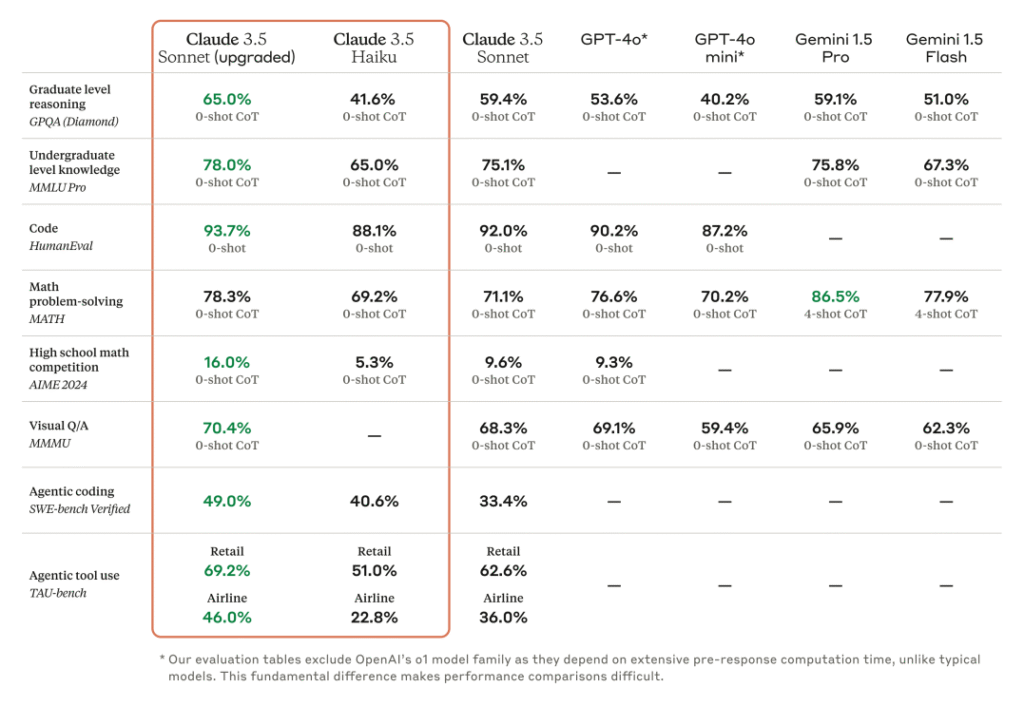
- Claude 3.5 Haiku & Sonnet – Earlier models that brought enhanced reasoning, multimodal capabilities (e.g., interpreting images) and coding prowess into mainstream adoption via Amazon Bedrock.
- Claude Opus 4.6 – The latest generation model, optimized for complex multi-step tasks, enterprise workflows, and autonomous reasoning that requires fewer human corrections.
Unlike many older AI assistants, Claude isn’t just regurgitating text: it plans, iterates, and can sustain agentic tasks with the potential to complete workflows like code generation, legal analysis, financial modeling, and report generation.
Why is the Global IT Industry Shaking?
▶ AI Replacing Traditional Software Workflows
Anthropic’s new AI software offerings, especially tools like Claude CoWork, are positioned as alternatives to established enterprise applications. These aren’t simple add-ons but potential replacements for:
- Legal research and contract review
- Financial services modeling and forecasting
- Data analysis and business intelligence
According to multiple reporting sources, the announcement of these tools triggered a sharp sell-off in global software stocks, including legal-tech and SaaS companies, as investors suddenly reassessed their business valuations in the face of AI-driven productivity.
This dynamic is a clear sign that Anthropic AI isn’t just building incremental new AI tools, it’s challenging entire software categories.
▶ Enterprise Adoption and Strategic Backing
Anthropic’s growth is not just technical, it’s strategic. Amazon has invested billions into Anthropic, making AWS the primary training and deployment partner for Claude models.
In practical terms, this means:
- Claude models are broadly available through Amazon Bedrock
- Enterprise clients can host Claude securely on AWS infrastructure
- Developers can integrate the models directly into business systems
This scaled access, backed by big-tech infrastructure, sharpens Anthropic’s competitive edge versus legacy vendors and even newer rivals like OpenAI.
Data & statistics: The AI Adaption Wave
Although not all adoption data is publicly available, independent research suggests massive momentum behind generative AI:
📊 AI Productivity Gains:
Internal studies (e.g., engineering usage data) reported that Claude automation reduced task completion times by as much as 80% in repetitive coding tasks, with ~79% of usage fully automated rather than simple augmentation.
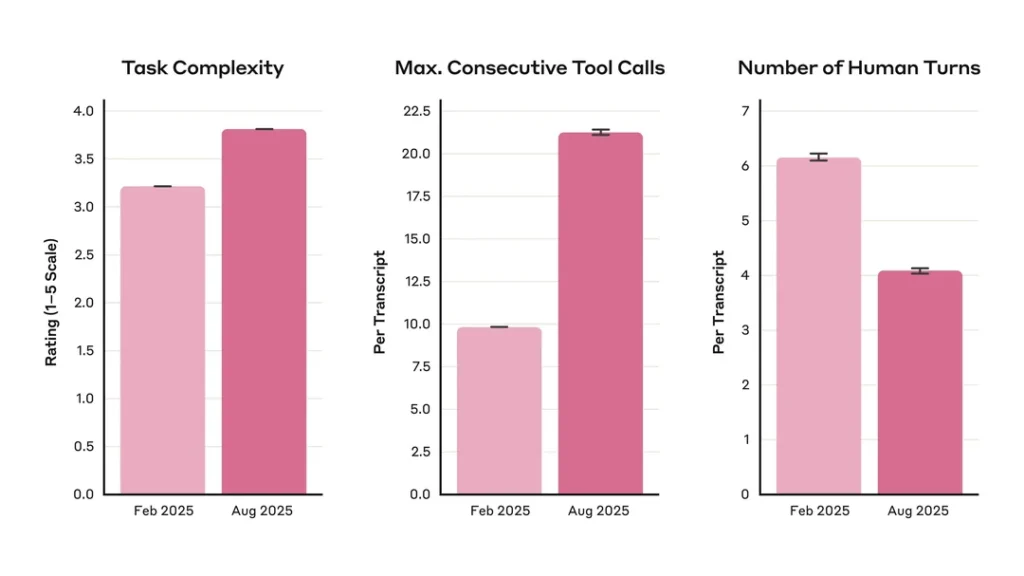
📈 Enterprise Takeup:
Reports from Cognizant, one of the world’s largest global IT services firms, show active deployment of Claude model integrations to enhance software delivery and accelerate AI scaling across tens of thousands of enterprise jobs.
These figures show not just innovation but adoption: companies are investing real development resources around Anthropic’s AI solutions to transform internal operations and customer offerings.
Conclusion
Anthropic’s rapid evolution, from Claude 3.5 to Opus 4.6 and the emergence of agentic new AI tools, signals a turning point in new AI software and new AI models. By combining cutting-edge reasoning, enterprise integration, and strategic partnerships with industry giants like Amazon, it’s not just innovating in AI: it’s reshaping the future of work and redefining software itself.
As CIOs, developers, and business leaders watch these trends, one thing is clear: the age of AI-augmented workflows is here and Anthropic AI is at the forefront.
FAQs
Anthropic emphasizes reason-based safety, advanced planning, and sustained agentic workflows, often with larger context windows, stronger error correction, and specialized tools that automate entire tasks rather than just respond to prompts.
Claude CoWork is an AI tool designed to handle professional workflows, like legal document analysis, that were traditionally done by expensive software or human experts. Its arrival has disrupted markets by threatening these revenue streams.
Amazon has invested billions and integrated Claude models into its AWS Bedrock platform, making cutting-edge AI models available to enterprise developers along with secure infrastructure.
Yes. Rapid automation at this scale raises ethical, economic, and security considerations, especially around job displacement, decision accuracy in critical domains, and responsible usage. These are active topics of industry research and debate.
Claude’s usage is expanding globally, with reports of major growth outside the U.S., including plans for localized support and new international offices.