
Introduction
Remember when adding “AI powered” in your pitch was sufficient for raising everyone’s eyebrows and probably even getting investments into your project idea.
But those are the gone days now, today AI has become basic part of your business. I mean busiensses won’t even consider you good enough if you aren’t utilizing AI into your daily operations🤷.
AI is no longer the hip intern retrieving data in the US startup scene. The co-founder is the one who works around the clock, doesn’t request equity just yet, and releases features more quickly than your development team (after three coffees).
The catch is that not all AI trends are worthwhile pursuing. There are some that are revolutionary. Some people simply “hope” and “put a chatbot on it.” The true winners? startups that are aware of the true direction of artificial intelligence and know how to apply it strategically rather than merely fashionably.
Let’s examine the AI software development trends that US startups should be interested in before you add yet another “smart” feature to your product.
AI Software Development Market Size and Growth Projection
Today, the software development industry is experiencing transformative growth, expecting the market size to reach $1,450.87 billion by 2031, with a strong emphasis on quality and innovation, such as automation and the use of low code platforms.
Key Market Trends & Insights
- North America dominated the global AI in software development market with the largest revenue share of 42.1% in 2024.
- The AI in the software development market in the US led North America with the largest revenue share in 2024.
- By end user, the healthcare segment is expected to grow at the fastest CAGR of 52.7% from 2025 to 2033.
- In terms of technology, machine learning held the dominating position.
Top Software Development Trends
Iot and AI Integration
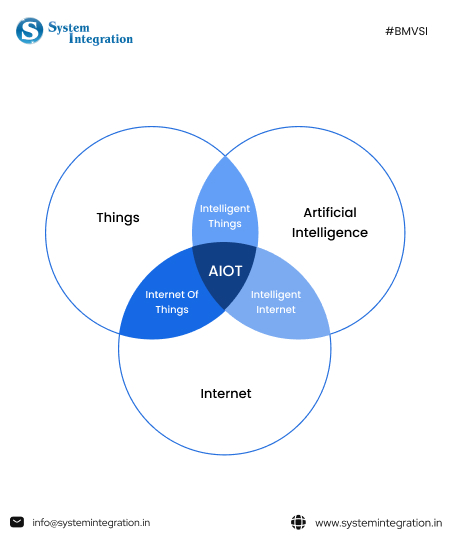
AI and IoT are transforming data into autonomous, real-time decisions, with the market expected to grow at 31.7% annually through 2030. Machine learning operations are maturing to automate the lifecycle of AI models, from deployment to training, often utilizing serverless architecture.
- Why this trend matter?
- AI analyse sensor data to identify equipment failures.
- genAI is also being used to create synthetic data for training purposes.
- Software is evolving from passive analytics to active AI agents.
Adoption of Agentic AI
Agentic AI is fundamental to applications in 2026 for judgment, personalization, AI automation and predictive analytics. From AI copilots under development to intelligent customer-facing systems, AI is accelerating both how software gets written and deployed.
It means less development effort will need to go into infrastructure and more room for teams to move fast and innovate, not repeat.
- Why this trend matter?
- Facilitates the accelerated development and deployment of software
- Improves user experience through personalization
- Drives data driven decision-making at scale
Cybersecurity Automation
With cybersecurity automation, AI, and rule-based systems work together to not only identify but also respond to and contain threats in real time.
Automated security tools are a vital component of applications. Today, automated security tools monitor applications on a continuous basis, detect vulnerabilities in early stages and take action when encountering a threat without human delay.
| Example of Cybersecurity Automation ✅ Treat detection and analysis: automatically collects data to identify suspicious patterns in real time. → incident response: triggers automated “playbooks” to contain threats, such as isolating a compromised device, blocking malicious URLs, or resetting compromised user passwords. → vulnerability management: continuously scan systems for known vulnerabilities. |
- Why this trend matter?
- Cuts down incident response times to security issues
- Reduces human error when identifying threats
- Scales to protect systems with less operational effort
DevOps and CI/CD
In the exDevOps world, it’s all about continued improved collaboration, observability and security integration (aka DevSecOps) and AI power release management spread across complex cloud-native environments.
Today’s CI/CD pipelines even automate testing, deployment (and rollback) and monitoring with little human intervention.
- Why this trend matter?
- Speeds software delivery without compromising quality
- Increases the reliability of the system and the consistency of deployment
- Allows for rapid response and ongoing optimisation
Low Code vs Custom Code
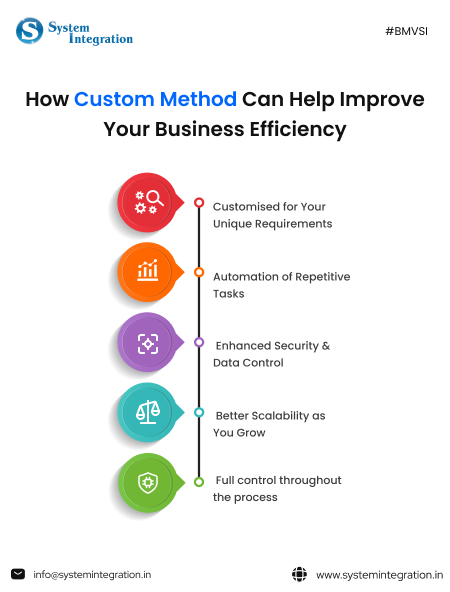
Low-code and custom code platforms are changing the way applications are developed, requiring less hand coding. In 2026, companies build on these platforms to quickly develop internally used tools, dashboards, workflows and integrations without needing much engineering effort. This trend has empowered non technical businesses to develop their own app.
- Why this trend matter?
- Speeds up application development cycles
- Decreases reliance on big development teams
- Conduit between the business and IT
Generative AI in Healthcare
Generative AI in healthcare utilises advanced algorithms, such as Large Language Models(LLMs) and Generative Adversarial Networks(GANs), to create new data, content, and insights, rather than just analysing existing data.
- Why this trend matter?
- AI tools can process large amounts of data more efficiently.
- Generative AI even assist in reducing the R&D timeline.
- Medical scribing tools are changing the way patients encounter notes and record them.
| Interesting Facts About AI in Healthcare |
|---|
| ⭐ The USA is forecasted to generate $ 102.2 billion in revenue by 2030 through AI in industry. ⭐ More than half(53%) of EU healthcare organisations plan to use medical robotics. ⭐ Four in five (80%) pathologists believe AI will boost life expectancy. ⭐ Between 2022 and 2023 alone, the market grew by close to half (45%) from $ 15.4 billion to $22.4 billion. |
Blockchain Beyond Cryptocurrency
Companies rely on blockchain for transparency in supply chain, identity management, smart contracts and secure data sharing.
Through the provision of decentralized, infallible records, blockchain creates trust among numerous parties without intermediation.
- Why this trend matter?
- Increases transparency and trust
- Enhances data security and integrity
- Reduces reliance on centralized intermediaries
Conclusion
For US startups, AI has gone from optional to competitive advantage. The strategy is following the right trends with a sound method and solid execution. Thus, if you want to build AI for your own business and are looking to partner with the best AI software development company in USA, we can help you with our team of experienced AI software development services.
FAQs
By automating code generation, enhancing testing and debugging, enabling autonomous agents, and improving decision making through predictive analytics, AI will play a major role in 2026. In order to increase productivity and shorten time to market without sacrificing code quality, developers will depend more and more on AI assistants.
Companies that grasp these trends ahead of their competition can:
➜ Make future proof technology decisions
➜ Avoid costly re-architecture later
➜ Out-innovate the competition faster
➜ Align your software purchases with the long game
No. It isn’t even feasible or strategic to embrace all trends. Start with trends that solve actual business problems, technologies that fit your existing goals and will scale as you grow, and tools that align with the systems you already use.
Yes, and typically anyway modernizing what you have in place is cheaper than starting again e.g. adding AI, automation or analytics Improving performance, security and UX.
Due to business demands for minimal human error, lower operating costs, and quicker releases, automation is becoming indispensable. By 2026, teams will be able to effectively streamline development, testing, deployment, and maintenance processes thanks to workflow automation tools, CI/CD pipelines, and AI-driven orchestration.