
-85%
reduction in manual content effort
0%
faster weekly publishing cycle
Improved
newsletter consistency
Higher
team productivity
Scalable system
adaptable to multiple industries
PROJECT OVERVIEW
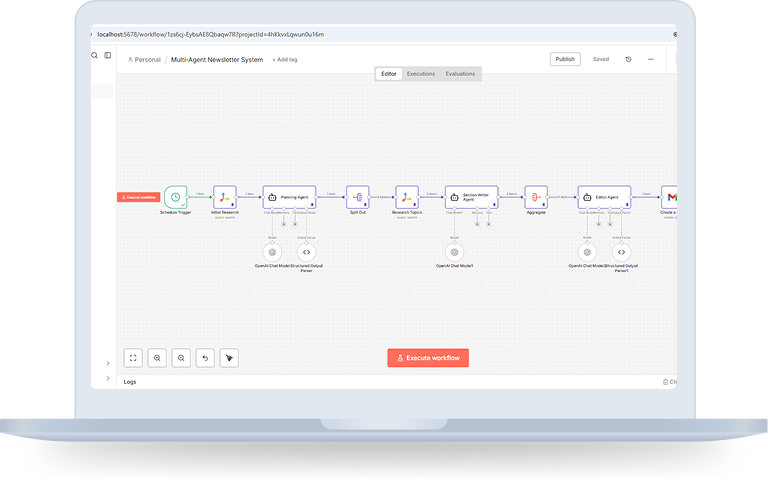
Creating high-quality, research-driven newsletters every week requires significant time for research, structuring, writing, and editing. To eliminate this manual effort, we built a Multi-Agent Newsletter Automation System using n8n.
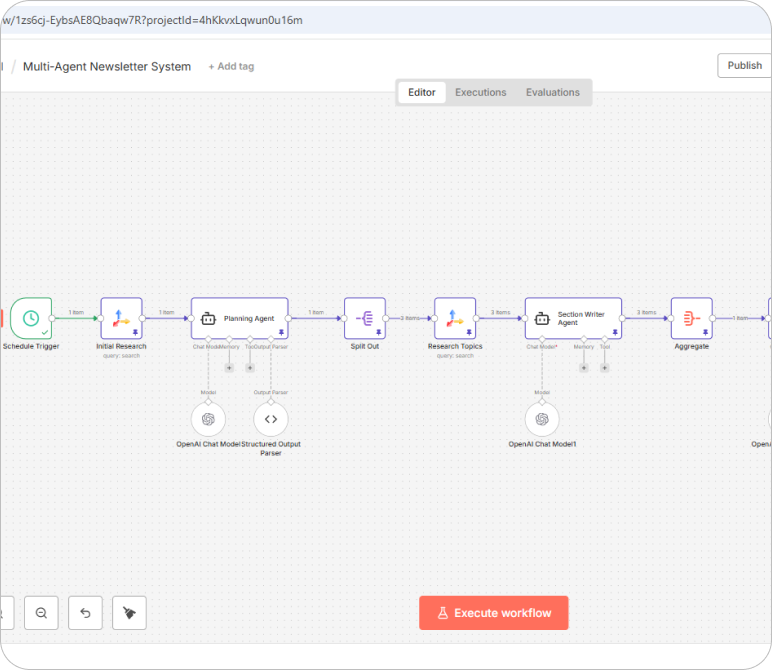
The workflow automatically runs on a schedule, gathers fresh data from the web, intelligently plans the newsletter structure, writes content section-by-section using AI agents, edits it for clarity and tone, and finally creates a ready-to-review email draft inside Gmail.
The result is a fully automated, scalable, and consistent weekly newsletter generation system.
Objectives

Automate weekly research-based newsletter creation

Eliminate manual research and drafting

Maintain consistent content structure and tone

Reduce turnaround time for email campaigns

Create ready-to-send email drafts automatically

Build a scalable AI-driven content system
The Challenge
Before automation, the newsletter process involved:
This process limited scalability and increased dependency on manual effort.
THE SOLUTION ARCHITECTURE (HOW DOES IT WORK?)
We designed a multi-agent AI workflow inside n8n that combines web research, AI planning, content generation, and editing into a single automated pipeline.
How does it work?
Step 1: Scheduled Trigger
- The workflow runs automatically on a weekly schedule
- No manual intervention required
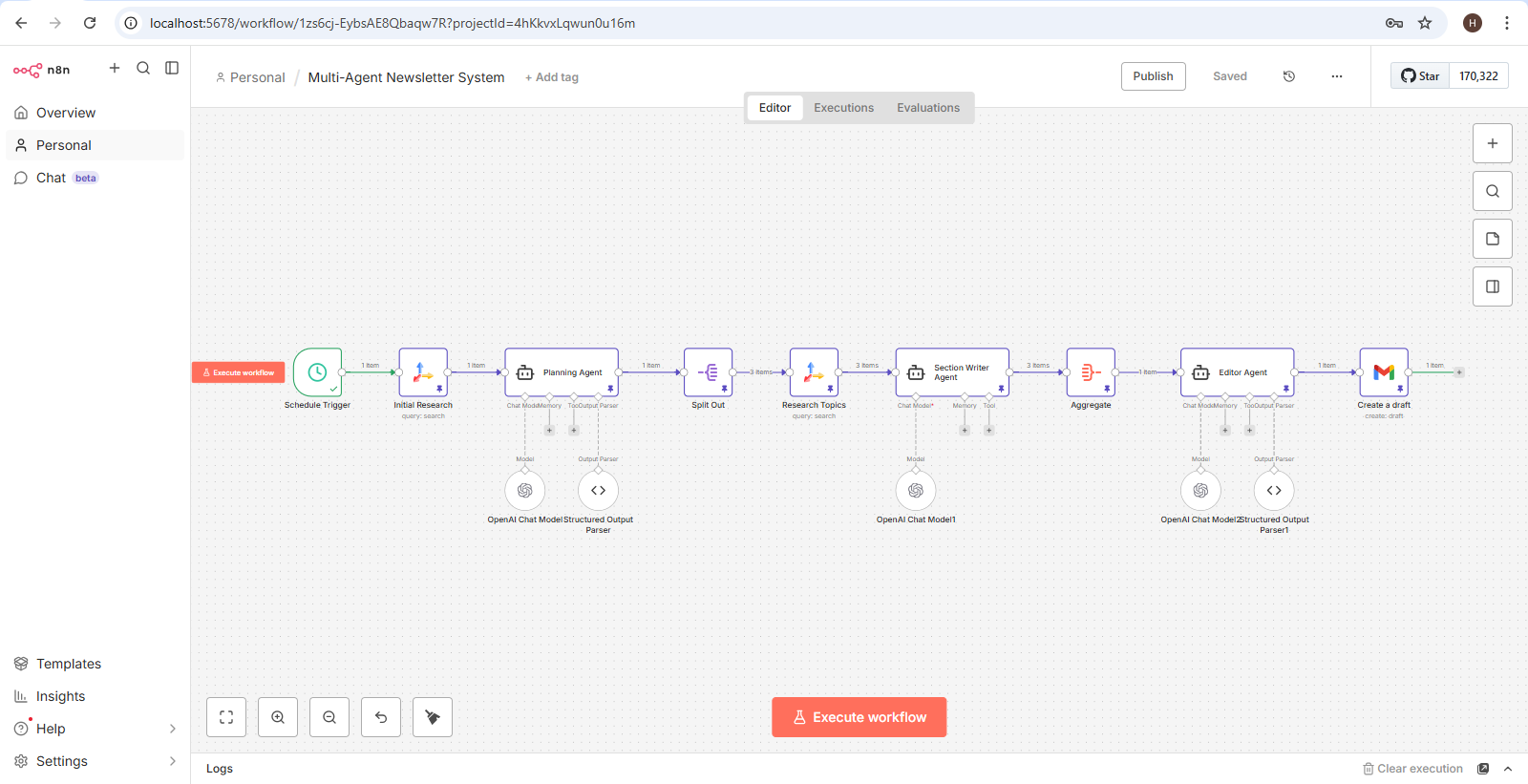
Step 2: Initial Web Research
- The system performs a search using Tavily
- Collects the latest and most relevant data based on predefined research queries
Step 3: AI Planning Agent
An AI planning agent powered by OpenAI analyzes research data
Determines:
- Key topics to include
- Logical structure of the email
- Section order and content flow
Step 4: Section Splitting
- Planned sections are split into individual workflow items
- Allows parallel processing and modular content generation
Step 5: Topic-Level Deep Research
- Each section topic is sent to Tavily for deeper, focused research
- Collects more detailed insights for higher content quality
Step 6: AI Section Writer
- A Section Writer AI Agent generates engaging, readable content
- Converts research data into structured newsletter sections
Step 7: Content Aggregation
- All sections are combined into one complete draft
- Forms the full newsletter body
Step 8: AI Editor Agent
An AI Editor reviews the aggregated draft
Improves:
- Grammar
- Clarity
- Tone consistency
- Overall readability
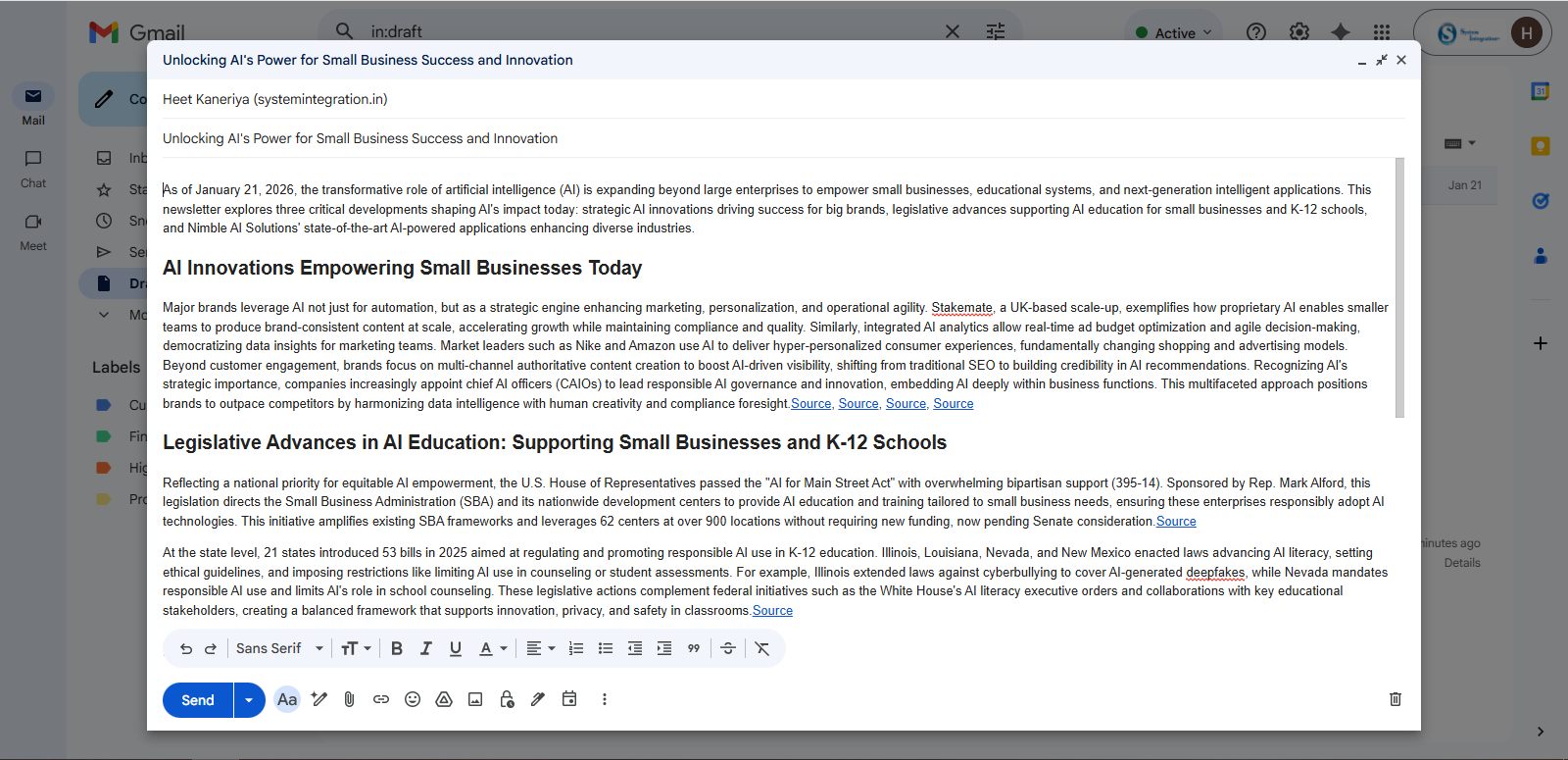
Step 9: Email Draft Creation
- Final polished content is automatically saved as a draft in Gmail
- Ready for manual review or scheduling
Technology Stack Included
Key Benefits
Fully automated weekly newsletter creation
Saves hours of research and writing time
Consistent structure and professional tone
Modular and scalable workflow design
Easy to customize topic, frequency, or format
Reduces dependency on content teams
The Solution Is Ideal For
Download The Case Study
You’re one step away from building great software. This case study will help you learn more about how BMV System Integration helps successful companies extend their tech teams.
Enter Your Detail
Closure
This project demonstrates how AI agents combined with workflow automation can transform repetitive content operations into a scalable, intelligent system.
By leveraging n8n for orchestration, Tavily for research, and OpenAI for structured content generation and editing, we created a production-ready automation that eliminates manual workload while maintaining high content quality.
The architecture is modular and can easily be extended to blogs, reports, social content, and other recurring research-driven communication workflows.
