
0%
improved Average Rule Lookup Time
0–30%
increased Query Handling Capacity
0%
Improvement in Accuracy
0–3x
increased Multilingual Accessibility
0–70%
Reduction in Operational Cost
PROJECT OVERVIEW
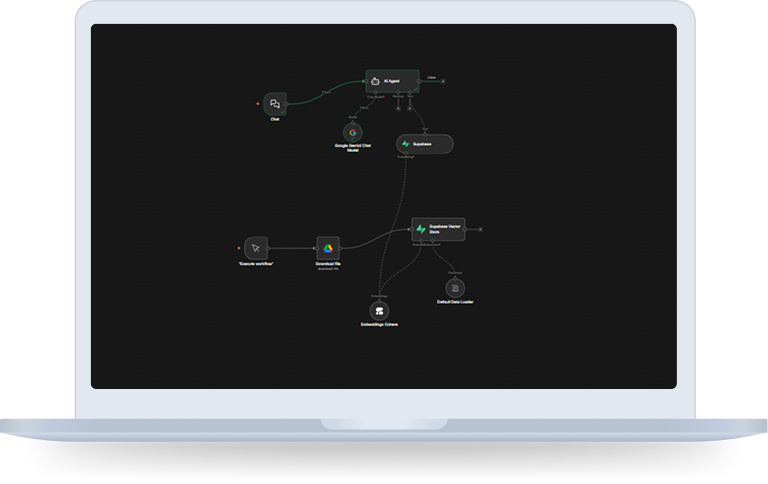
The Golf Rules AI Agent Workflow is a Retrieval-Augmented Generation (RAG) solution built on n8n that enables instant, accurate answers to golf-related queries using official rule documents.
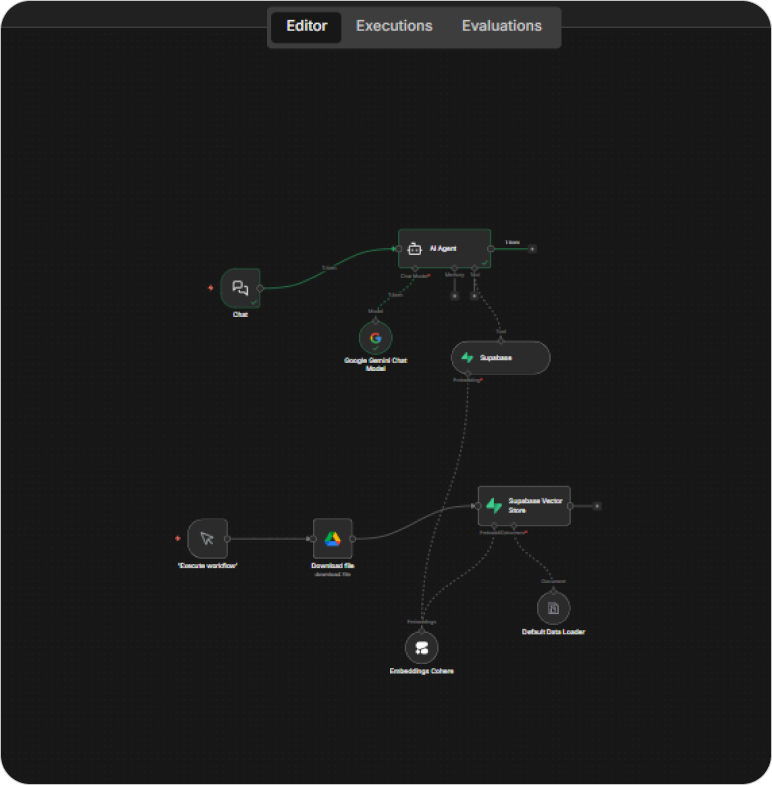
The system automatically downloads PDF documents from Google Drive, converts them into vector embeddings, stores them in a vector database, and allows users to ask natural language questions through a chat interface powered by Google Gemini.
Instead of manually searching through rulebooks, users receive context-aware, document-grounded responses in seconds with multilingual support and references to official rules.
Objectives

Create an AI-powered assistant grounded in official golf rule documents

Enable semantic search instead of keyword-based PDF search

Provide accurate, context-based answers only from verified documents

Reduce dependency on manual rule checking

Support multilingual user queries

Centralize and maintain rule documents in a scalable system

Allow easy reprocessing when rulebooks are updated
THE CHALLENGE
Organizations and sports associations managing rule documentation often face:
Traditional document storage does not provide intelligent search capabilities, making rule clarification slow and inefficient.
THE SOLUTION ARCHITECTURE (HOW DOES IT WORK?)
This workflow uses Retrieval-Augmented Generation (RAG) methodology, combining vector search with AI response generation.
How does it work?
Step 1: PDF Upload & Source of Truth
Official golf rule documents are stored in Google Drive.
- n8n downloads the PDF automatically
- Example: Rules_of_Golf_Simplified.pdf
- The document becomes the single verified knowledge source
Step 2: Document Processing & Vector Storage
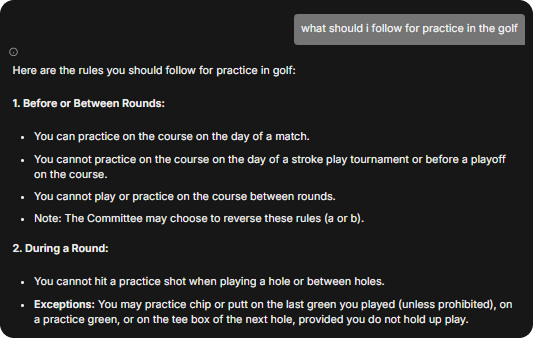
- PDF content is extracted using a Data Loader node
- Text is converted into structured chunks
- The content is stored in Supabase Vector Store
- Semantic indexing enables fast contextual retrieval
Instead of searching for keywords, the system retrieves meaning-based matches.

Step 3: Embedding Generation
Using Cohere embeddings:
- Text is converted into vector representations
- Similarity search becomes highly accurate
- Natural language questions can match relevant rule sections
Step 4: AI Agent with Context Restriction
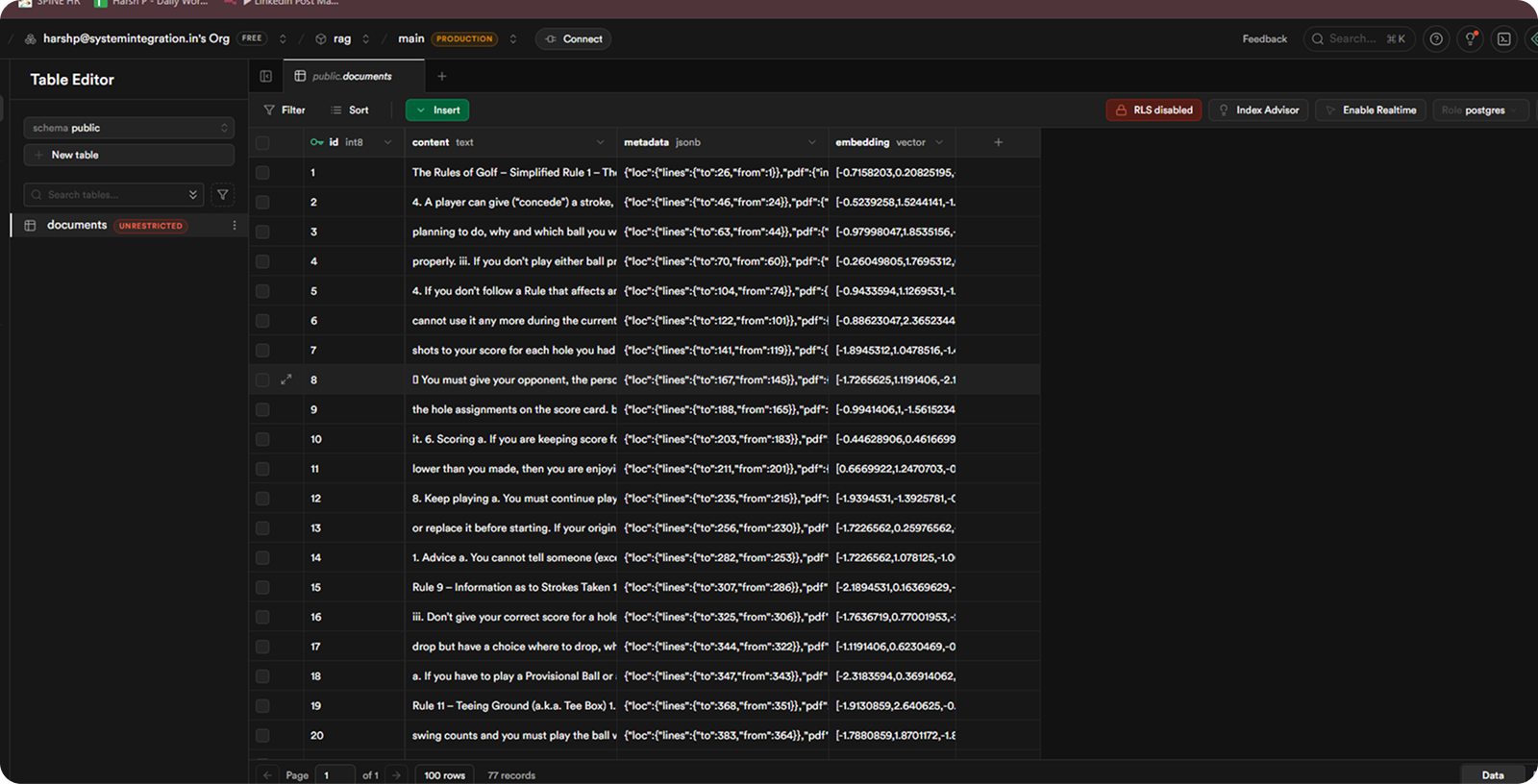
The AI Agent powered by Google Gemini:
- Retrieves only relevant document chunks from the vector store
- Generates answers strictly based on retrieved content
- Avoids hallucinations by refusing answers not found in documents
- Detects user language automatically
- Responds in the same language
- Provides references to rule sections or pages where applicable
This ensures high reliability and transparency.
Step 5: User Query Interface
- A Chat Node exposes a webhook
- Users submit questions via chat
- The workflow retrieves relevant vector data
- AI generates a contextual, document-backed answer instantly
Step 6: Optional Manual Trigger
If rulebooks are updated:
- A manual trigger allows document reprocessing
- New embeddings are generated
- Vector store is refreshed
This ensures the assistant always reflects the latest official rules.
TECHNOLOGIES USED
Key Benefits
Retrieval-Augmented Generation (RAG) architecture
Semantic search over PDF documents
Multilingual AI responses
Context-restricted AI to prevent misinformation
Instant document-backed answers
Centralized vector knowledge base
Easy document updates and scalability
The Solution Is Ideal For
Download The Case Study
You’re one step away from building great software. This case study will help you learn more about how BMV System Integration helps successful companies extend their tech teams.
Enter Your Detail
Closure
The n8n Golf Rules AI Agent demonstrates how Retrieval-Augmented Generation can convert traditional documents into an intelligent knowledge system.
By combining n8n, semantic vector storage in Supabase, embeddings via Cohere, and contextual AI responses from Google Gemini, the solution ensures fast, accurate, and document-backed answers.
This is more than a chatbot, it is a scalable AI knowledge infrastructure that enhances accessibility, reduces manual effort, and modernizes how organizations interact with official documentation.
