Introduction
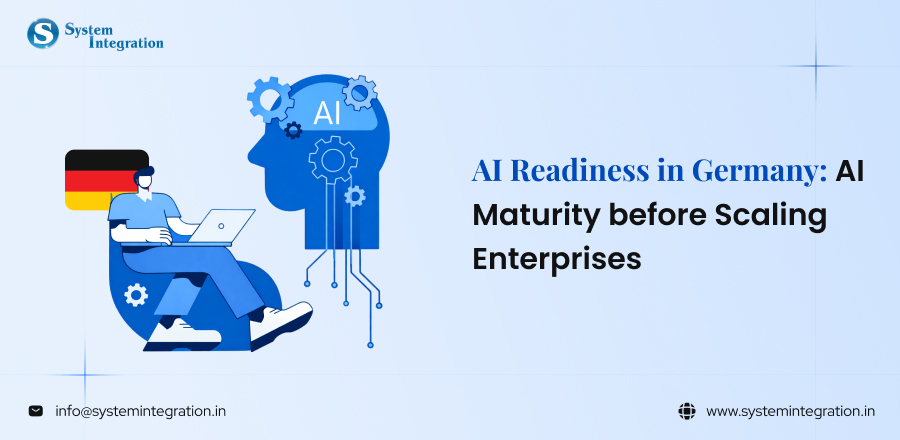
In Germany, businesses are embracing artificial intelligence (AI) technology (the latest buzzword being “Industrie 4.0”) at an incredible pace, from small and medium enterprises, with everyone insisting on smarter factories, predictive analytics, and chatbots that always work!
Yet there is one area of concern regarding the implementation of AI🤔. You wouldn’t buy a self-driving car without knowing how to drive a car on public roads… well, that’s essentially what could happen if you implement AI without evaluating your level of preparedness for AI deployment.
An “AI Maturity Assessment” is required to determine if a business has clean data, skilled people, and an established process ready for machine learning.
This blog will provide an analysis of the importance of preparing for AI, what can happen if you do not prepare for AI, and how German companies can successfully ramp up their AI capabilities without creating an extremely expensive digital transformation project.
Overview of the Trends of AI Adoption in Germany
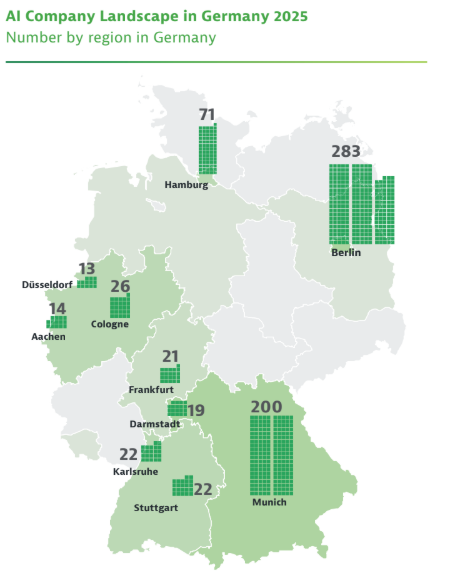
Germany is no longer “experimenting” with AI. It is now scaling it successfully throughout the country. AI adoption has progressed from using pilot projects to achieving enterprise-wide transformations.
Here is a recap of the trends of AI adoption throughout Germany 👇:
- Enterprises are shifting from proof of concept to full deployment.
- A lot of support, both from the German government and the EU, is being provided for digital innovations.
- Investments in developing adequate data infrastructures and performing data automation have increased.
- Practical ROI-driven use cases are becoming more important than speculative use cases.
- AI/ML has become one of the four pillars of the enterprise AI strategy in Germany; it is not just an IT experiment.
Market Highlights of Germany’s Artificial Intelligence
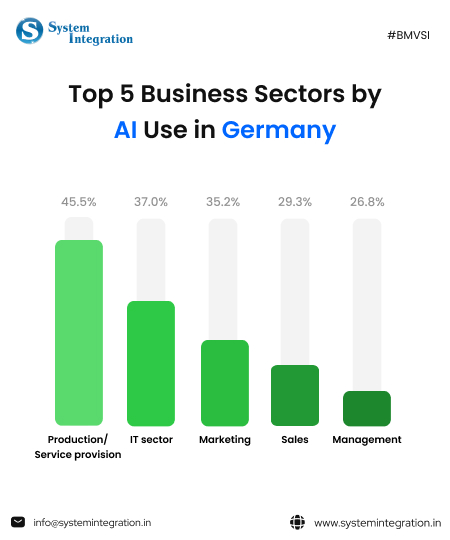
- The Germany artificial intelligence market generated a revenue of USD 29,671.1 million in 2025 and is expected to reach USD 203,894.9 million by 2033.
- The German market is expected to grow at a CAGR of 26.3% from 2026 to 2033.
- By segment, services were the largest revenue-generating solution in 2025.
Data Summary
| Market revenue in 2025 | USD 29,671.1 million |
| Market revenue in 2033 | USD 203,894.9 million |
| Grow rate | CAGR of 26.3% from 2026 to 2033 |
What is AI Readiness?
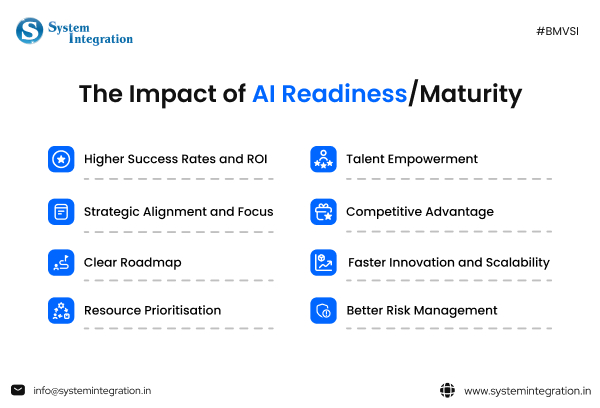
AI readiness relates to the capability of an organization to adopt and scale AI solutions throughout business use cases following a systematic, secure, and value-oriented approach.
It’s not just about having AI tools, it’s also about having the strategy, data, people and governance to make AI actually work at scale quickly.
Core Pillars of AI Maturity
Strategy & Leadership Alignment:
This clear executive vision knits AI initiatives closer to business priorities through such practical execution objectives like measurable results, KPIs accountability, sustained investment and company-wide responsibility for the success of transformation.
Data Infrastructure & Governance:
The key to large-scale deployment of AI is in having trustworthy, well-documented data systems governed for quality and access, security, and compliance with regulations: it’s the bedrock on which you develop your scalable AI.
Technology Stack & Tools:
A modular technology stack with cloud, AI tools and automation infrastructure natively integrated allows for easy deployment, experimentation and business wide expansion of AI on scale.
Talent & Skills:
Expertise for innovation pool With trained data experts, AI-focused leaders and ongoing employee upskilling programs, organizations have the necessary expertise to innovate in developing, implementing and scaling AI solutions.
What is AI Maturity?
An AI maturity model is a formalised way for organisations to assess where they are in the AI journey from early awareness to being a fully mature, AI-driven organisation.
It adds insight into current capabilities and gaps, as well as the actions required to scale AI responsibly and strategically. Not “Are we ready for AI?”, the maturity model provides a path to develop and sustain growth.
Stages of AI Maturity
➔ Awareness Stage
Companies are finding uses for AI and seeing its potential. Conversations start at the leadership level, yet formal strategy, data readiness and focused AI investments are in short supply or non-existent.
➔ Experimentation Stage
Companies conduct pilot projects and proof of concept efforts to validate feasibility. AI initiatives are fragmented, data is in silos and the bottom-line impact is yet to come.
➔ Stage of Operationalisation
Pilots that are successful move into production systems. In order to support scalable implementation efforts, AI integrates with business workflows, governance frameworks are developed, and cross-functional collaboration is improved.
➔ Optimisation Phase
Businesses use automation and performance data to improve AI models. Higher operational efficiency and competitiveness are fuelled by advanced analytics, continuous improvement procedures, and more accurate ROI measurement.
➔ AI-Powered Enterprise Phase
AI becomes a key component of corporate strategy. Across all departments and leadership levels, operations, innovation, and decision-making are data-driven, scalable, compliant, and always changing.
Step by Step Guide to Achieve AI Readiness
Stage 1: Assess Authenticity of Business Strategy
Begin by evaluating to what extent AI initiatives can actually help your company’s goals.
- Measure AI projects against tangible business KPIs.
- Validate strong support, and long-term support from the top.
- How to build a clear AI Roadmap, in line with the digital transformation objectives.
Step 2: Assess Data Readiness
Quality of data and governance are key to AI success.
- Assess how clean and structured your data is, if it’s readily available and ample in size for AI use cases.
- Review data governance frameworks and compliance with regulations, such as GDPR.
- Discover data movement gaps between traditional systems and modern data platforms.
Step 3: Analyze Technology Infrastructure
You need the analyze tech stack to deploy AI at scale.
- Evaluate if cloud, hybrid or on-premises help manage AI workloads.
- Check for API, automation platform and AI tool access.
- Check that scalable security and resilience measures are established.
Step 4: Estimate Talent and Organizational Capabilities
AI readiness actually includes both technical and organizational preparedness.
- Check if you have an AI in-house developers or do you need to do partnerships.
- Evaluate current AI education and reskilling initiatives.
- Promote cross-departmental collaboration among IT, operations and other departments.
Why choose BMV System integration for your AI Readiness Assessment?
BMV System Integration can help you determine how prepared your organization is for AI by providing you with a structured assessment of where you are now in terms of AI usage, developing a strategic roadmap for the future, and offering scalable, industry-specific AI automation services that meet your compliance and growth requirements.
Consider BMVSI for the following reasons:
- Framework to evaluate AI maturity within your industry
- Comprehensive evaluation of your existing strategy, data, and infrastructure related to AI
- Emphasis on ensuring compliance with GDPR and EU AI regulations
- Expertise in scalable methods of automating and integrating processes
- Continuous optimization and implementation support
Conclusion
In Germany, businesses are embracing artificial intelligence (AI) technology at an incredible pace from small and medium enterprises, with everyone insisting on smarter factories, predictive analytics, and chatbots that always work!
For making your business AI ready, partner with the best AI software development company in Germany, as it helps you with developing a strategic roadmap for the future, and offering scalable, industry-specific solution.
FAQs
Artificial intelligence readiness is the measure of an organisation’s readiness to implement and scale AI technologies effectively. It also incorporates factors like data quality, infrastructure, skills, ethics, governance and change management.
The AI maturity assessment is designed to evaluate the readiness and capacity of an organisation in adopting artificial intelligence, machine learning and data driven solutions.
There can be many factors leading to the failure of AI project, including poor data quality, unclear ROI, weak governance, talent shortages, and infrastructure that cannot handle production loads.
Research identifies data quality and governance as the most significant gaps, followed by cultural change management and the ability to connect AI to measurable business value.
While frameworks like Gartner, Deloitte, or Forrester are useful, a custom framework is recommended to tailor the evaluation to your specific industry context.