Introduction
Digital marketing has evolved far beyond manual campaigns, spreadsheets, and guesswork. Today, speed, personalization, and accuracy decide who wins attention and who gets ignored. This is exactly where AI automation steps in, not as a replacement for marketers, but as a powerful system that works quietly in the background to make teams faster, smarter, and more consistent.
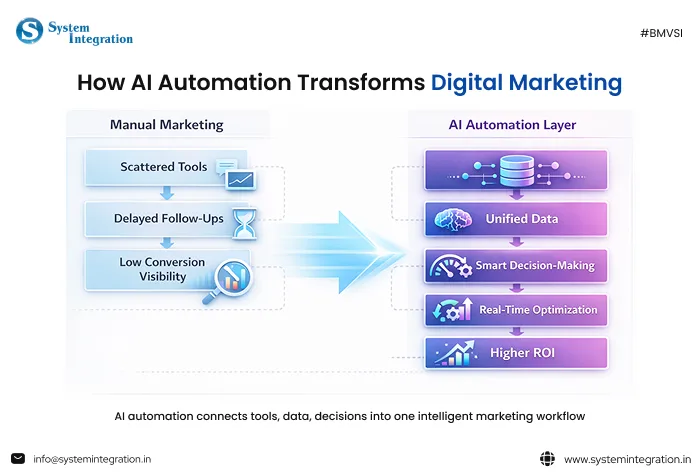
Modern marketing teams deal with scattered data, multiple tools, constant follow-ups, and growing expectations for ROI. Artificial intelligence automation helps connect all these moving parts into workflows that actually work together. When done right, it doesn’t feel like “automation”, it feels like clarity.
In this blog, we’ll explore the most practical AI workflow automation use cases that every digital marketing team should adopt to scale performance without burning out their people, a trend increasingly highlighted in AI Launch Reviews as automation becomes central to modern marketing success.
Why AI Automation Is No Longer Optional in Digital Marketing
Marketing today is not just creative, it’s operational. Leads need to be captured instantly, nurtured intelligently, analyzed continuously, and handed over to sales at the right moment. Doing this manually slows teams down and increases the risk of human error.
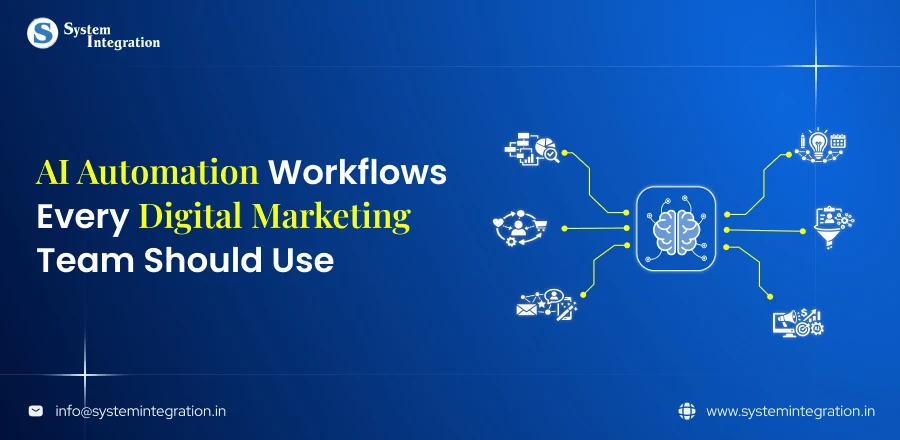
AI in marketing automation solves this by learning from patterns, responding in real time, and improving decisions automatically. Instead of marketers jumping between tools, AI automation workflows connect CRM systems, ad platforms, analytics, email tools, and chatbots into one intelligent flow.
This is why more brands are now working with an AI automation agency or investing in structured AI automation services not for hype, but for efficiency that compounds over time.
WORKFLOW 1: AI-Powered Lead Capture and Qualification Workflow
One of the most valuable workflows for any marketing team is automated lead handling. Traditional forms capture data, but AI goes several steps further.
An AI automation workflow can instantly analyze lead behavior, such as time spent on pages, form responses, traffic source, and intent signals and assign a quality score in real time. High-intent leads are routed directly to sales, while low-intent or early-stage leads enter a nurturing sequence automatically.
This kind of AI workflow automation ensures no opportunity is wasted and sales teams only focus on leads that matter. It also shortens response time dramatically, which directly improves conversion rates.
Teams that implement this through structured AI automation services often see better lead quality within weeks, not months.
WORKFLOW 2: Intelligent Email and Campaign Personalization Workflow
Sending emails is easy. Sending emails that feel personal at scale is where most teams struggle.
With artificial intelligence automation, email campaigns no longer rely on static segments. AI analyzes user behavior, engagement history, browsing patterns, and interaction timing to dynamically personalize content, subject lines, and even send times.
This workflow continuously learns what works for each user and adjusts future campaigns automatically. Over time, open rates and click-through rates improve without marketers manually tweaking every campaign.
If you’re planning to integrate this level of personalization, exploring professional AI automation services can help ensure your tools and data sources are connected correctly from day one.
WORKFLOW 3: AI Automation for Content Planning and Distribution
Content creation doesn’t end when a blog is published. The real challenge is distributing it effectively across platforms without repeating manual work.
AI automation workflows can analyze which content formats perform best on which channels, recommend repurposing ideas, and schedule distribution automatically. A single blog can be transformed into social posts, email snippets, ad creatives, and summaries using intelligent automation logic.
This approach allows marketing teams to stay consistent without increasing workload. Many brands that adopt AI automation for content workflows also align it with broader strategy, like the ideas discussed in this guide on the future of marketing automation.
WORKFLOW 4: Paid Ads Optimization Workflow Using AI
Managing paid campaigns manually across Google, Meta, and LinkedIn is time-consuming and often reactive. AI changes this by continuously monitoring performance signals and making micro-adjustments automatically.
An AI automation workflow can pause low-performing ads, reallocate budgets, adjust bids based on intent signals, and even sync ad messaging with landing page behavior. This ensures campaigns stay optimized without constant human intervention.
Marketing teams that work with an experienced AI automation agency often implement these workflows alongside CRM and analytics platforms to create a closed-loop optimization system.
WORKFLOW 5: AI-Based Customer Journey and Nurturing Workflow
Not every lead is ready to buy today. The real value lies in nurturing users until they are.
AI automation workflows track user behavior across emails, websites, ads, and chat interactions to understand where each lead is in the buyer journey. Based on these signals, AI triggers the right message at the right time, educational content for early-stage users and conversion-focused offers for decision-ready prospects.
When connected properly through AI workflow automation, this creates a smooth, non-intrusive journey that feels natural to the user but is fully automated behind the scenes.
For teams planning to build such systems, integrating AI with existing tools is often the first step, which can be explored through solutions like AI integration services.
WORKFLOW 6: Workflow Automation for Marketing Operations and Reporting
Reporting is one of the most underestimated time drains in marketing. Pulling data from multiple tools, cleaning it, and presenting insights often takes more time than strategy itself.
With AI automation, reporting workflows can automatically collect data, identify trends, flag anomalies, and even generate insights in plain language. This allows marketing leaders to focus on decisions instead of dashboards.
By combining AI with structured workflow automation solutions, teams gain real-time visibility without manual reporting cycles.
When to Consider AI Automation Services
While many tools claim to be “AI-powered,” real impact comes from how well they are connected. Fragmented automation often creates more confusion than clarity.
This is why growing teams choose dedicated AI automation services to design workflows that align with business goals, data structure, and team processes. Instead of isolated tools, you get a system that evolves with your marketing strategy.
If your team is planning to scale campaigns, improve lead quality, or reduce manual effort, exploring end-to-end AI automation solutions is a practical next step.
Final Thoughts: AI Automation Is a Growth Multiplier, Not a Shortcut
AI automation is not about replacing marketers or eliminating creativity. It’s about removing friction from execution so teams can focus on strategy, messaging, and innovation.
When implemented thoughtfully, AI in marketing automation turns scattered activities into intelligent workflows that learn, adapt, and improve over time. Whether you’re a startup or an enterprise team, the right artificial intelligence automation framework can become your biggest competitive advantage.
The key is to start with workflows that solve real problems and build from there.
FAQs
AI automation in digital marketing uses artificial intelligence to automate repetitive tasks such as lead qualification, campaign optimization, personalization, and reporting. It helps marketing teams improve efficiency, accuracy, and ROI by making data-driven decisions in real time.
AI workflow automation connects multiple marketing tools into a single intelligent system. It automatically triggers actions based on user behavior, optimizes campaigns, and ensures leads are nurtured without manual intervention.
Yes, AI automation is especially valuable for small teams. It reduces manual workload, improves response time, and allows limited resources to scale marketing efforts without hiring large teams.
An AI automation agency designs, implements, and optimizes AI-powered workflows tailored to business goals. They ensure tools like CRM, ads, analytics, and email platforms work together seamlessly.
Traditional marketing automation follows predefined rules, while AI automation learns from data, adapts to user behavior, and improves workflows over time using artificial intelligence.
Basic AI automation workflows can be implemented within a few weeks, while advanced systems involving CRM, ads, and analytics may take 1–3 months depending on complexity.