Why KYC Automation Is A Game Changer?
Ever tried filling out one of those endless forms and thought, “Seriously, did I just sign my life away?” Welcome to manual KYC, where identity checks are slow, repetitive and often feel like watching paint dry on a rainy Monday morning.
Now imagine a world where identity verification happens in minutes instead of days, where bots do the heavy lifting, and compliance is transparent and consistent across teams without anyone muttering “Oops, I missed that field”. That world is KYC Automation.
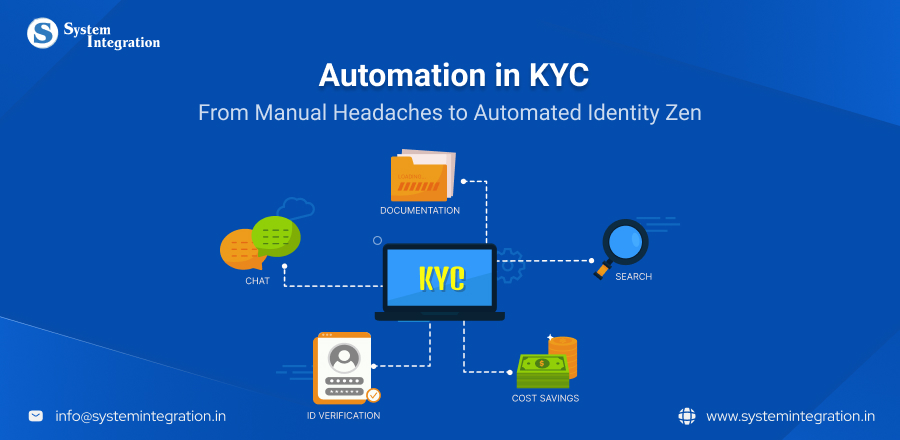
KYC automation uses technology from OCR (Optical Character Recognition) to AI and Machine Learning to replace tedious manual steps with efficient digital ones. ANd it’s not just about speed: it’s about accuracy, compliance, scalability and delightful customer experiences.
What Exactly Is KYC Automation?
Simply put, automated KYC turns the traditional, slow identity verification workflow into a fast, rule-based and AI-enhanced digital process. Instead of compliance officers manually checking every ID and cross-referencing with watchlists automation:
→Reads and validates identity documents digitally
→Matches faces through biometric checks
→Applies consistent regulatory rules
→Screens against sanctions, PEP lists, and risk database
→Continuously monitors changes and flags anomalies
This digital workflow replaces repetitive human tasks and lets analysts focus on actual risk-based decisions.
Why Manual KYC Feels Like Trying To Herd Cats?
Manual KYC processes are notorious for being:
- Time-draining: One document at a time, every time
- Error-prone: Humans make mistakes – shocker!
- Expensive: Teams, laptops, coffee – repeat monthly.
- Inconsistent: Different reviewers mean different decisions
- A customer frustration engine: Drop-offs at the onboarding stage are common when users get stuck on repetitive tasks.
McKinsey reports that many financial institutions still allocate up to 10-15% of their workforce solely to KYC and AML tasks, a sign that manual processes are both expensive and inefficient.
Top Benefits Of KYC Automation
- Blazing Fast Onboarding
KYC automation can cut down verification from days to minutes leading to happier customers and reduced drop-off rates. - Serious Cost Savings
Automated systems can process thousands of records without paying extra salaries or overtime leading to per-verification costs falling from $15–$20 to $1–$3. - Accuracy Levels That Humans Can’t Match
AI and machine learning models spot document anomalies, tampering, and inconsistencies far better than manual reviews. - Regulatory Compliance That Plays by the Rules
Automated workflows can integrate AML screening, watchlist checks, and jurisdiction-specific rules in one unified pipeline reducing the risk of outdated checks or missed flags. - Scalability Without Extraneous Staff
Whether onboarding 50 users or 50,000 in a day, automation scales without sacrificing quality or speed, something manual teams simply can’t match. - Superior Customer Experience
Users hate redundancy especially when being asked for the same selfie three times. Automated KYC streamlines forms, clarifies steps, and informs users instantly boosting onboarding completion rates. - A Foundation for Future AI Compliance Innovation
Once automation is in place, adding advanced analytics, predictive risk scoring, or behavior-based assessments becomes easier – future-proofing your KYC stack.
| Detailed Use Cases: Where Automation Shines 1. Digital Customer Onboarding From banking apps to fintech wallets, automation accelerates user verification and reduces drop-offs. 2. Transaction Monitoring Automated systems track patterns in real-time and flag suspicious behavior immediately (no waiting for a human to spot it after lunch). 3. AML & Watchlist Screening Screening against global sanctions, PEP lists, or risk databases automatically ensures compliance across jurisdictions. 4. Age & Identity Verification For age-restricted services or high-trust platforms, automation confirms eligibility instantly. Risk-Based KYC Decisions 5. Risk-Based KYC Decisions Systems can adapt checks based on user risk score - fewer steps for low risk, deeper validation for high risk. 6. Continuous Monitoring KYC automation isn’t a one-and-done task. Systems keep watching for changes that require action. |
KYC Automation Tools
The Tech Stack that Makes Compliance Feel Less Painful
Let’s clear one thing up first -> KYC automation is not a single tool.
It’s more like a well-coordinated orchestra where OCR, AI, AML screening, and workflow automation all play together. When one instrument goes off-key, compliance gets… loud.
Below are the core categories of KYC automation tools and how they work together to create a smooth, scalable verification process.
1. Identity Verification & Document Verification Tools
These tools handle the first and most critical step, verifying who the customer really is.
What they do:
- Scan government-issued IDs (passport, national ID, driver’s license)
- Extract data using OCR
- Detect forged or tampered documents
- Validate document authenticity
Technologies involved:
- OCR (Optical Character Recognition)
- AI-based document pattern recognition
- Image quality & tampering detection
💡 Why it matters:
Manual document checks are slow and subjective. Automated tools apply the same verification rules every single time, no mood swings, no missed details.
2. Biometric & Liveness Detection Tools
Uploading an ID isn’t enough anymore. Fraudsters are smarter, and deepfakes are getting scarier. That’s where biometrics step in.
What these tools do:
- Match selfie images with ID photos
- Perform liveness checks (blink, head movement, 3D face mapping)
- Detect spoofing, masks, and deepfake attempts
Common biometric methods:
- Facial recognition
- Video-based liveness detection
- Behavioral biometrics (advanced setups)
So the big question is….
3.AML, Sanctions & Watchlist Screening Tools
KYC is incomplete without AML (Anti-Money Laundering) screening. These tools ensure you’re not onboarding someone who appears on a sanctions list… or a most-wanted list.
What they do:
- Screen customers against global sanctions lists
- Identify Politically Exposed Persons (PEPs)
- Check adverse media and criminal databases
- Perform ongoing risk monitoring
Key benefit:
Screening happens in real time, not weeks later during an audit panic.
4. AI & Risk Scoring Engines
This is where automation becomes intelligent, not just fast.
What AI-driven tools handle:
- Assign risk scores based on identity, geography, behavior, and transaction history
- Trigger enhanced due diligence (EDD) for high-risk users
- Reduce false positives through machine learning models
Result:
- Low-risk users move fast
- High-risk users get deeper checks
- Compliance teams focus only where needed
5. Workflow Automation & Orchestration Tools
These tools connect everything together documents, biometrics, AML, decision rules into a single automated KYC flow.
What they automate:
- Document upload → verification → approval/rejection
- Rule-based routing (auto-approve, manual review, escalate)
- Notifications and status updates
- SLA tracking and audit logging
Why they’re critical:
Without workflow automation, even the best verification tools feel fragmented and messy.
6. Data Security, Privacy & Compliance Tools
KYC involves sensitive personal data and regulators don’t take privacy lightly.
These tools ensure:
- Data encryption (at rest & in transit)
- Role-based access control
- Compliance with GDPR, local data laws, and industry regulations
- Secure data storage and retrieval
7. Continuous KYC & Monitoring Tools
Modern KYC doesn’t stop after onboarding. Customer profiles change and automation keeps watching quietly in the background.
What continuous KYC tools do:
- Monitor profile changes
- Track unusual behavior or transaction patterns
- Trigger re-verification when risk levels change
This approach is often called Perpetual KYC and it’s becoming the new standard.
| Choosing The Right KYC Automation Tools: What To Look For The best KYC automation tool is the one your compliance team doesn’t complain about. Before selecting tools, ask: →Can it scale with my customer growth? →Does it support API based integration? →Is it configurable for regional regulations? →Does it offer audit-ready reporting? →Can humans intervene when needed? |
Step-By-Step Guide To Implementing KYC Automation
To implement automation effectively, follow a modular approach:
1. Document the Current Workflow
Identify bottlenecks and repetitive steps. Automation should target high-impact areas first.
2. Digitize Identity Assets (OCR + Data Capture)
Convert scanned or image documents into searchable, structured data foundational for everything that follows.
3. Deploy AI/ML for Identity Verification
Use biometric matching, ML checks, and pattern detection to validate identities and flag anomalies.
4. Integrate AML Screening into the Workflow
Automated AML checks ensure sanctions and watchlist screening are part of the verification pipeline, not a separate step.
5. Use Advanced Tools for Edge Cases
LLMs and adaptive logic help interpret ambiguous data reducing manual reviews and increasing accuracy.
6. Monitor & Audit Your System Regularly
Automation doesn’t mean “set and forget.” Regular checks ensure the system evolves with regulatory changes and real-world data shifts.
Conclusion
KYC automation is no longer optional, it’s a strategic foundation for digital trust, faster revenue cycles, and happier customers. From banks to fintechs and beyond, organizations that embrace this technology can turn compliance from a drag into a drive of growth.
So, if your compliance team still has coffee mugs labeled “I survived another manual KYC week”, it might be time for a little automation magic.
FAQs
KYC automation is the use of technologies like AI, OCR, biometric verification, and workflow automation to verify customer identities digitally. It replaces manual document checks and data entry with faster, more accurate, and compliant automated processes.
Yes. Modern KYC automation systems use encryption, role-based access control, secure APIs, and compliance frameworks (like GDPR and regional data laws) to protect sensitive customer data throughout the verification process.
Not entirely, and it shouldn’t. KYC automation handles routine and low-risk cases automatically, while high-risk or complex cases are escalated to human compliance teams. This “human-in-the-loop” approach ensures both efficiency and accuracy.
Industries such as banking, fintech, digital payments, insurance, healthcare, crypto platforms, and online marketplaces benefit significantly from KYC automation due to high onboarding volumes and strict compliance requirements.
KYC automation uses a combination of document verification tools, biometric and liveness detection systems, AML and sanctions screening tools, AI-based risk scoring engines, workflow automation platforms, and continuous monitoring solutions.
Continuous (or perpetual) KYC is an approach where customer profiles are monitored continuously after onboarding. Automated systems track changes in behavior, risk levels, or regulatory status and trigger re-verification when needed.
Automated KYC verification can take anywhere from a few seconds to a few minutes, depending on the complexity of checks required compared to days or weeks with manual KYC processes.
Yes. KYC automation systems are designed to align with AML regulations, FATF guidelines, and regional compliance requirements. They apply consistent rules, maintain audit trails, and adapt to regulatory updates.
The cost depends on factors like verification volume, geographic coverage, and features used. However, automated KYC typically reduces per-customer verification costs significantly compared to manual processes.
Yes. Many KYC automation platforms are scalable and API-based, making them suitable for startups and small businesses that want to grow without increasing compliance overhead.
KYC automation focuses on verifying customer identity, while AML automation monitors transactions and behavior to detect money laundering risks. In practice, both are integrated into a single automated compliance workflow.
Start by mapping your current KYC process, identifying bottlenecks, choosing scalable automation tools, and running a pilot project before full deployment. Partnering with KYC automation experts can accelerate this process.