Introduction
Remember when AI was just that mysterious thing companies mentioned to look cool in board meetings? Fast-forward to 2026: AI is no longer a buzzword. It’s a business engine, workplace teammate, creative partner, security guard, data analyst, therapist (almost), and occasionally the reason someone asks:
Relax. The future isn’t “robots replacing humans.” It’s humans working with AI – faster, smarter, and in ways we didn’t imagine 3 years ago.
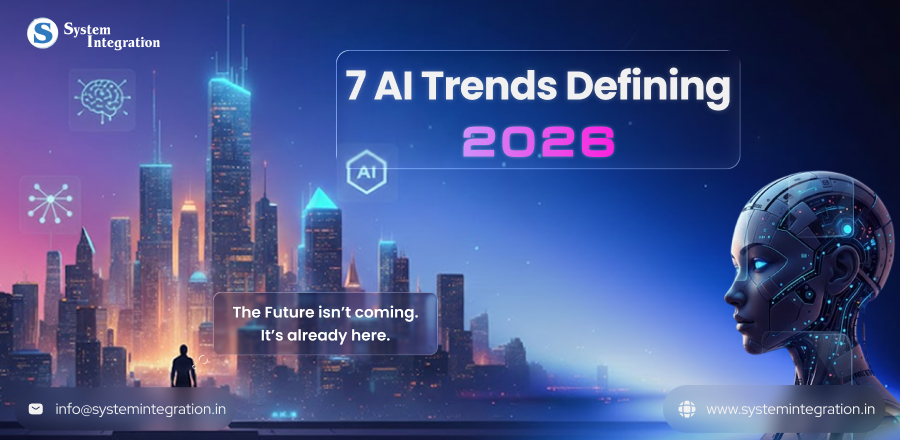
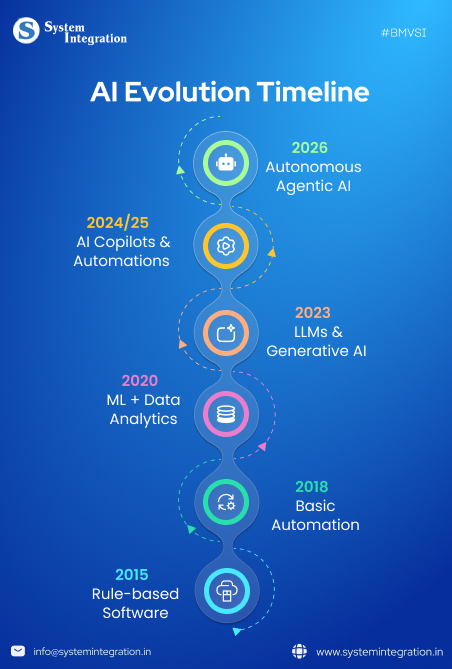
2026 is the year AI steps out of the lab and walks straight into everyday life and business infrastructure. Not just automating simple tasks, but actually thinking, planning, deciding, analyzing, and executing things we once needed teams for.
The world is entering a stage where AI doesn’t just enhance efficiency, it enhances intelligence. From autonomous AI agents to ethical AI, the upcoming years are shaping into an era of transformation not just for companies, but for entire industries and skills.
So grab your coffee ☕ and let’s dive into the 7 biggest AI trends that will define 2026 (and change the way we work, build, secure, and innovate).
1. AGENTIC AI FINALLY ARRIVES
We’ve already seen AI assist in writing, designing, calculating, and analyzing. But in 2026, the focus shifts from assistive AI to what many call agentic AI – AI that can operate autonomously. Instead of treating AI like a tool, companies are deploying it like a colleague. And before you panic, yes, the human stays in charge. AI just does the repetitive, boring things without complaining or asking for a salary hike.
Agentic AI can handle entire workflows: setting goals, planning a step-by-step strategy, assigning actions, and completing tasks without waiting for human input. Imagine AI that creates campaigns, books meetings, processes data, and executes multi-step operations while you sleep. The power of this trend isn’t just in automation, it’s in decision-making intelligence.
Businesses benefit from reduced operational friction and faster execution. Departments finally stop passing tasks like hot potatoes, and efficiency becomes the new normal. Agentic AI is less of a trend and more of a turning point in how work happens.
2. MULTIMODAL AI BECOMES MAINSTREAM
For years we trained AI to read and write. Then came the age of AI that understands voice. Now, in 2026, AI becomes fully multimodal, interpreting and generating text, images, videos, audio, and even real-time sensor data all at once. Think of it like giving AI all five senses.
This means you can show AI a video and ask it to generate a summary. You can record audio and ask for immediate transcription and insights. You can upload product images and ask for descriptions, suggestions, and competitive analysis. Creators, marketers, entrepreneurs, and product teams are able to do more in minutes than they once could in months.
The best part? AI doesn’t get stuck in single-format thinking anymore. It learns patterns across mediums, which means businesses no longer need ten tools for ten tasks. One multimodal system can ideate, create, plan, explain, and measure performance. It’s the kind of innovation that redefines productivity, not just enhances it.
3. EDGE AI MOVES INTELLIGENCE TO THE REAL WORLD
Until recently AI lived in the cloud. But with edge computing, AI is moving closer to where data is generated. It’s happening in vehicles, factories, medical devices, smart machines, and even retail stores. And the reason is simple: speed.
Real-time decision making doesn’t work well if your data needs to travel across the world and back. In industries like manufacturing, healthcare, and automotive, milliseconds matter. Edge AI processes data instantly and locally, making operations faster and more reliable.
This eliminates latency, lowers cost, improves privacy, and takes AI outside the internet’s dependency. In simple words: your future car, appliances, machines, or devices won’t wait for a server somewhere in another country. They’ll think and act right where they are.
| Why 2026 is the Breakthrough Year for AI ? The tech isn’t new. What changes in 2026 is scale, affordability, adoption & reliability. Companies are shifting from: ✅ experimenting with AI → to operating with AI ✅ single tool usage → to agent-based ecosystems ✅ traditional workflows → to autonomous execution |
4. AI BECOMES THE HEART OF CYBERSECURITY
Cyberattacks aren’t just increasing, they’re evolving. Hackers now use AI to break into systems, test vulnerabilities, and automate attacks. So naturally, AI has become the strongest defence. 2026 sees a massive rise in AI-driven cybersecurity, from anomaly detection to predictive intelligence.
Instead of waiting for threats to appear, AI is constantly scanning for danger. Businesses use AI for immediate breach identification, automated incident response, and real-time monitoring. Cybersecurity is no longer a cost, it’s a strategic advantage.
One of the major advantages here? AI doesn’t blink, sleep, or take holidays. It protects infrastructure faster and more accurately than humans ever could while humans still handle critical thinking. It’s an alliance that makes digital systems safer and more resilient.
5. AI GAINS MEMORY AND EMOTIONAL CONTEXT
Old AI was like talking to someone who forgot everything the moment you closed the window. 2026 changes that. AI has begun to understand context, remember previous conversations, and preserve personal preferences and history.
This makes interactions smoother, more humanized, and far more personalized. Customer support becomes intelligent. AI platforms remember your tasks, your style, and how you communicate. They become advisors rather than bots repeating scripted replies.
This trend signals a major shift in user experience. AI is no longer just a service, it becomes a companion in productivity. And honestly? It’s refreshing to see technology finally understand us instead of asking for the same information again and again.

6. THE WORLD DEMANDS ETHICAL AND EXPLAINABLE AI
With great power comes great responsibility and in 2026, the world finally acknowledges it. AI is now deeply tied to sensitive operations like legal decisions, financial recommendations, hiring, and medical diagnosis. That means transparency and fairness are essential.
Ethics isn’t optional anymore. Businesses are investing in:
- transparent algorithms,
- bias-free models,
- privacy frameworks,
- and governance guidelines.
The pressure for responsible AI will continue to increase. Governments, institutions, and industries want systems that are explainable, fair, and trustworthy. Not a black box that says “I decided this” without context.
| The AI Adoption Formula (Simple Version) There’s an easy success formula: AI + Process + People + Data = Growth Remove any one of these, and AI struggles . Most companies think AI = software. It’s not. AI = system. |
7. AI BECOMES UNIVERSALLY INTEGRATED ACROSS INDUSTRIES
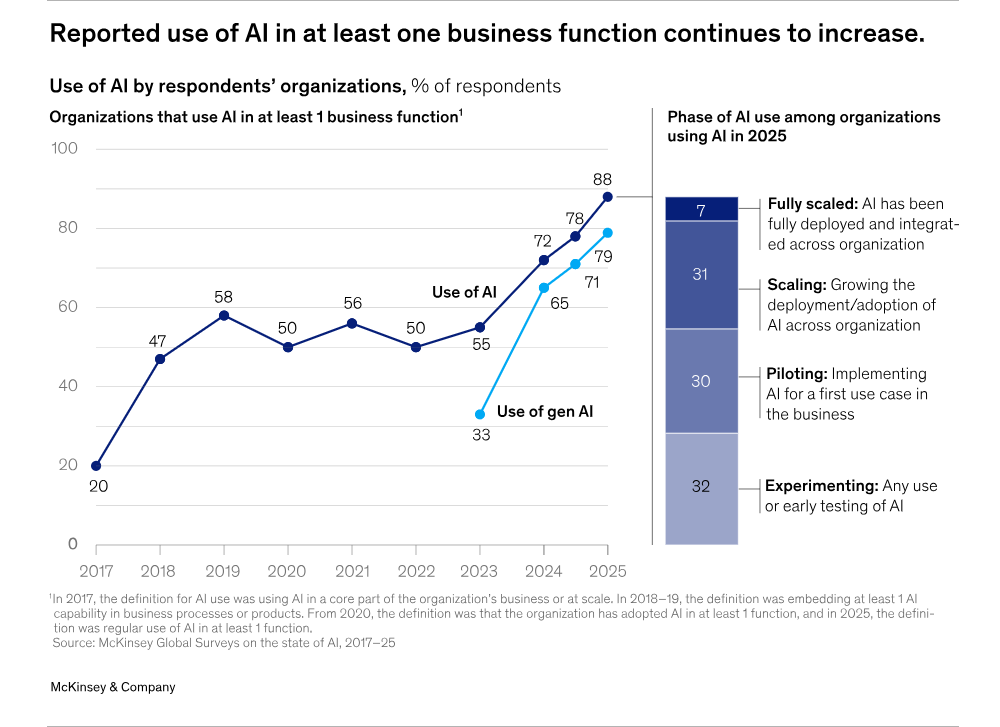
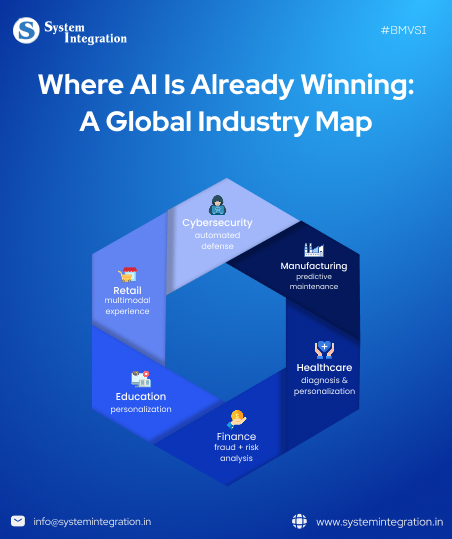
AI is no longer limited to tech companies. It’s becoming foundational in every sector: manufacturing, automotive, healthcare, education, finance, logistics, retail, and entertainment. Entire industries are reinventing operations to use AI at the core of their systems.
Organizations are no longer asking “Should we use AI?”
They’re asking “Where else can we use AI?”
The shift from AI as a supportive tool to an operational engine is already transforming workflows. The deeper integration of AI across departments creates a competitive edge that will define fast-moving companies for years to come.
Final Thoughts
2026 is much bigger than AI as we’ve known it. The conversation has moved from automation to intelligence, from experimentation to implementation, and from optional to essential.
The most powerful part of all this?
AI isn’t replacing people, it’s elevating people. It’s making businesses more adaptive, industries more efficient, and individuals more capable.
We’re entering a future where AI isn’t a threat or a mystery.
It’s a partner.
And this is only the beginning.
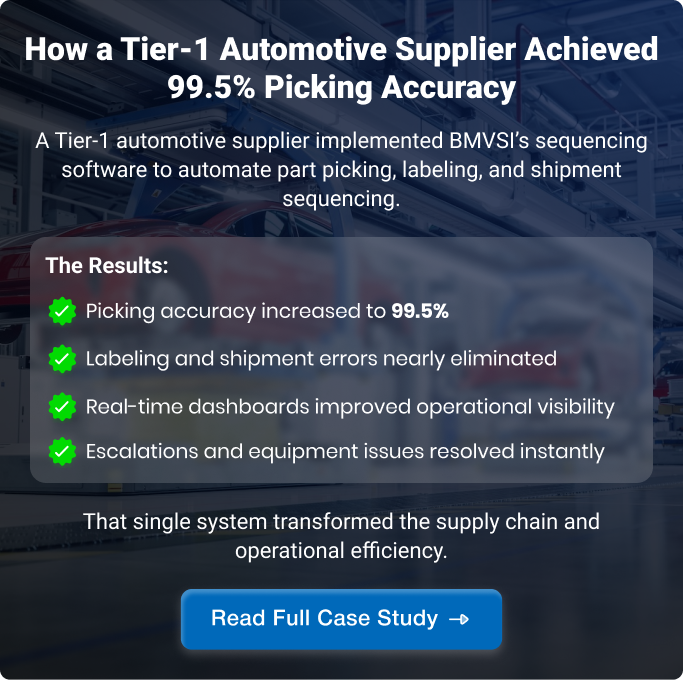
The future of AI isn’t about replacing humans, it’s about amplifying human capability. And as AI becomes the backbone of modern operations and innovation, the real advantage will belong to businesses that move first, adopt fast, and scale smart.
That’s exactly why companies partner with us (BMV System Integration) not just for AI implementation, but for strategy, automation, and making technology work in the real world. If you’re exploring where to start or how to scale, collaborating with BMVSI – the right AI experts can make the journey a lot smoother.

FAQs
Nope. That’s one of the biggest myths.
Small and mid-size companies are adopting AI faster because:
- They have less operational complexity
- Faster decision cycles
- Lower approval chains
- They see ROI quicker
In fact, many SMEs start with just one AI workflow, lead qualification, customer support, reports automation, or predictive analytics and scale gradually.
So yes, you don’t need a billion-dollar budget to start.
Most companies see results in 3–6 months, especially in cost savings and efficiency. The secret? Start small → prove value → scale.
No. It replaces tasks, not talent. It improves productivity and decision-making.
Think in terms of workflows, not shiny tools.
Ask yourself:
✔️ What slows us down?
✔️ Where do errors happen?
✔️ Where do humans repeat the same task every day?
Don’t chase “AI for everything.” Chase “AI that solves one expensive problem.
Not anymore. The story has changed.
Earlier: you needed data scientists + engineers + infrastructure.
Today: AI tools, APIs, and automation platforms allow:
✔️Faster deployment
✔️Lower development cost
✔️Zero infrastructure setup
So yes, AI is now budget-friendly even for non-tech founders.
Not necessarily.
Modern AI platforms allow drag-and-drop workflows, pre-built templates, and automation setups.
You should know:
- The business objective
- The process you want to improve
- AI handles the complex part.
Sales, support, HR, marketing, operations, finance, almost any workflow.
No.
There is:
☑️continuous optimization
☑️periodic updates
☑️scaling up solutions
But the setup doesn’t require daily effort, just checkpoints.
Using AI without a strategy.
Random tools → random outcomes.
Strategic approach → measurable results.
Always start with:
✅Goals
✅KPIs
✅Use-case
✅Implementation roadmap